This week, the Tour de France does something it has never done before.
Alpe d'Huez hosts the finish twice. Back to back. Friday and Saturday.
Stage 19 is the one everybody knows. Gap to Alpe d'Huez, 128km, over the Col du Bayard, the Col du Noyer and the Col d'Ornon, then up the 21 bends. 13.8km at 8.1%. The most famous climb in cycling, and the one every rider has rehearsed in their head since they were a kid.
Stage 20 is the one we can't stop thinking about.
170.9 kilometres. 5,450 metres of climbing. The Col de la Croix de Fer, 24km at 5.2%. The Télégraphe, 11.9km at 7.1%. The Galibier, 17.7km at 6.9%, topping out at 2,642 metres, the highest point of this year's race. And then, instead of the 21 bends, the riders turn onto something else entirely.
They finish over the Col de Sarenne. 12.8km at 7.3%.
Here's why that stopped us in our tracks.
The Sarenne, In Winter 🏔️
If you've played Ready Steady Slope, you've held the Alpe d'Huez card. And if you've looked closely at it, you'll know the whole thing comes down to one run.
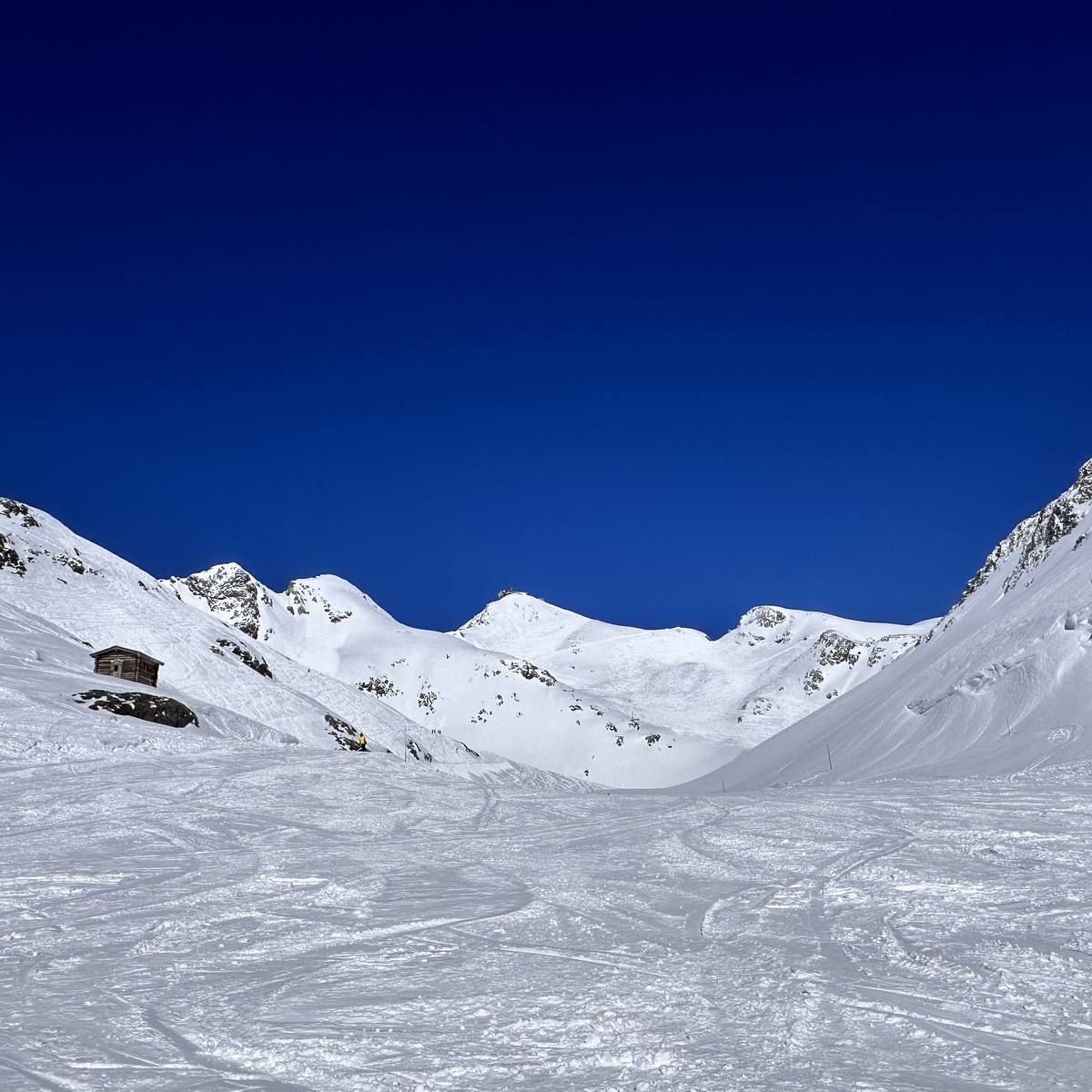
La Sarenne is 16 kilometres long. It is the longest black run in the Alps. You start at the top of the Pic Blanc at 3,330 metres, and you finish so far down the mountain that the light has changed, the temperature has changed, and your legs have opinions.
The gradient never turns savage. It doesn't need to. The length is what gets you — the sheer disbelief that you're still going, still turning, still descending, long after any normal run would have spat you out at a lift station.
So when the peloton grinds up the Col de Sarenne on Saturday, they're on the road that shadows one of the great descents in skiing.
What Nobody Tells Snowboarders About the Sarenne
We've ridden it twice. 2019 and 2024. 🏂
The 2019 lap was the easier one, and the only reason for that is fitness ... five years is five years, and the Sarenne does not care how you're feeling at bend nine. It's long enough that it stops being a run and starts being an afternoon.
But the thing we'd actually tell another snowboarder is this: it flattens out at the end. A lot.
That final section is a long, gentle run-out, and on a board a long flat run-out can be a lot of work with micro adjustments. Skiers skate it and barely notice. If you topple, you'll be unstrapping, facing a very long walk.
So wax your board. Both times we rode it, we waxed the night before with that run-out in mind. It is the single highest-value bit of preparation for the Sarenne and almost nobody mentions it.
And here's the other one. You don't have to ride it to the bitter end.
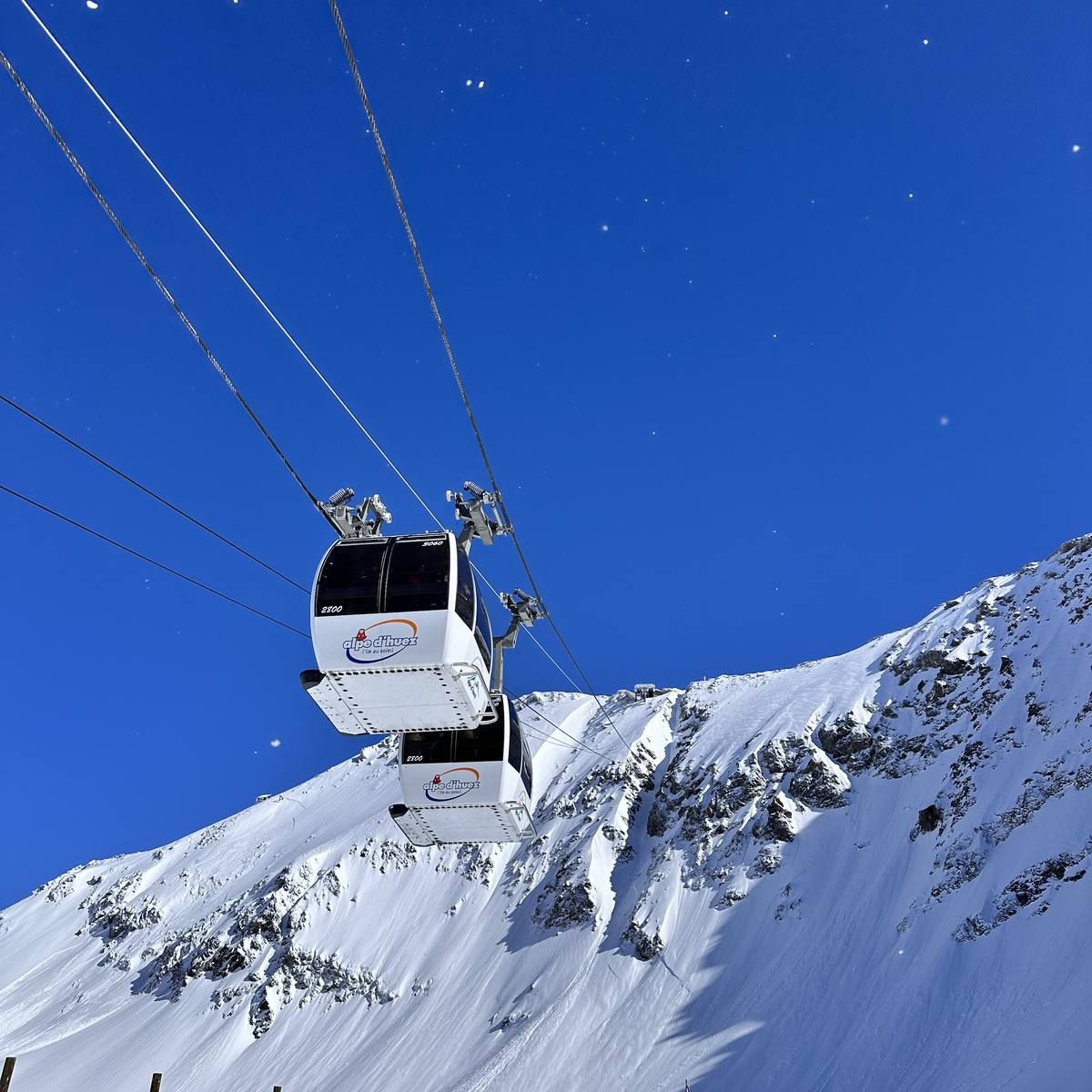
Come off to the right in the lower section, down at Pont du Gua in the gorge, and you can pick up the Chalvet chairlift instead. That takes you back up for the Campanules red 🔴, which is a proper fast, well-groomed run straight back into Alpe d'Huez. Better skiing than the run-out, and no pushing.
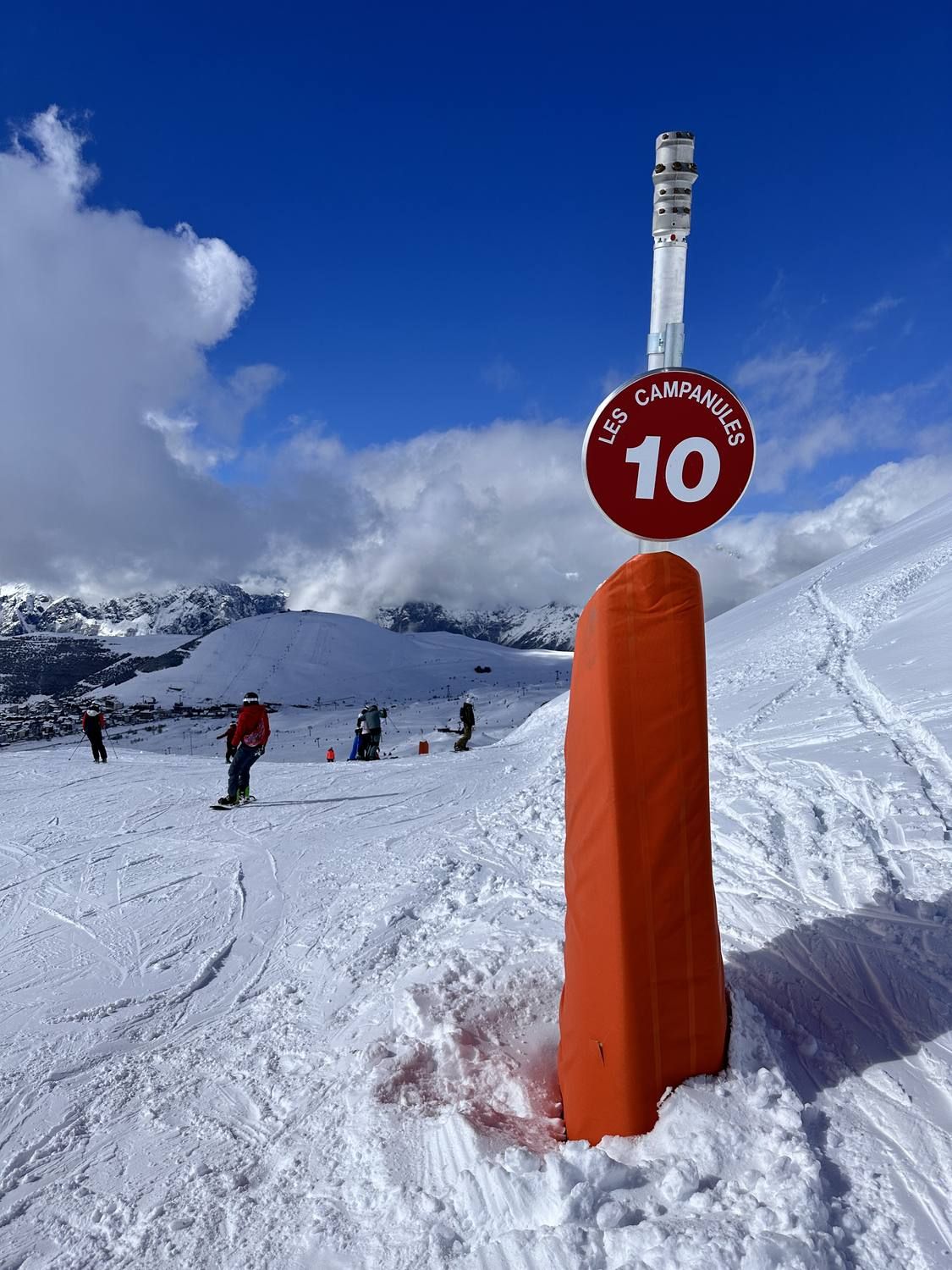
One more thing. There's a photo point at the top of the Chalvet chair just before dismounting, the Photopoint du Chalvet.
Don't forget to smile for the camera 😃 📸
— You earned it!
Same Mountain, Different Season 🚴
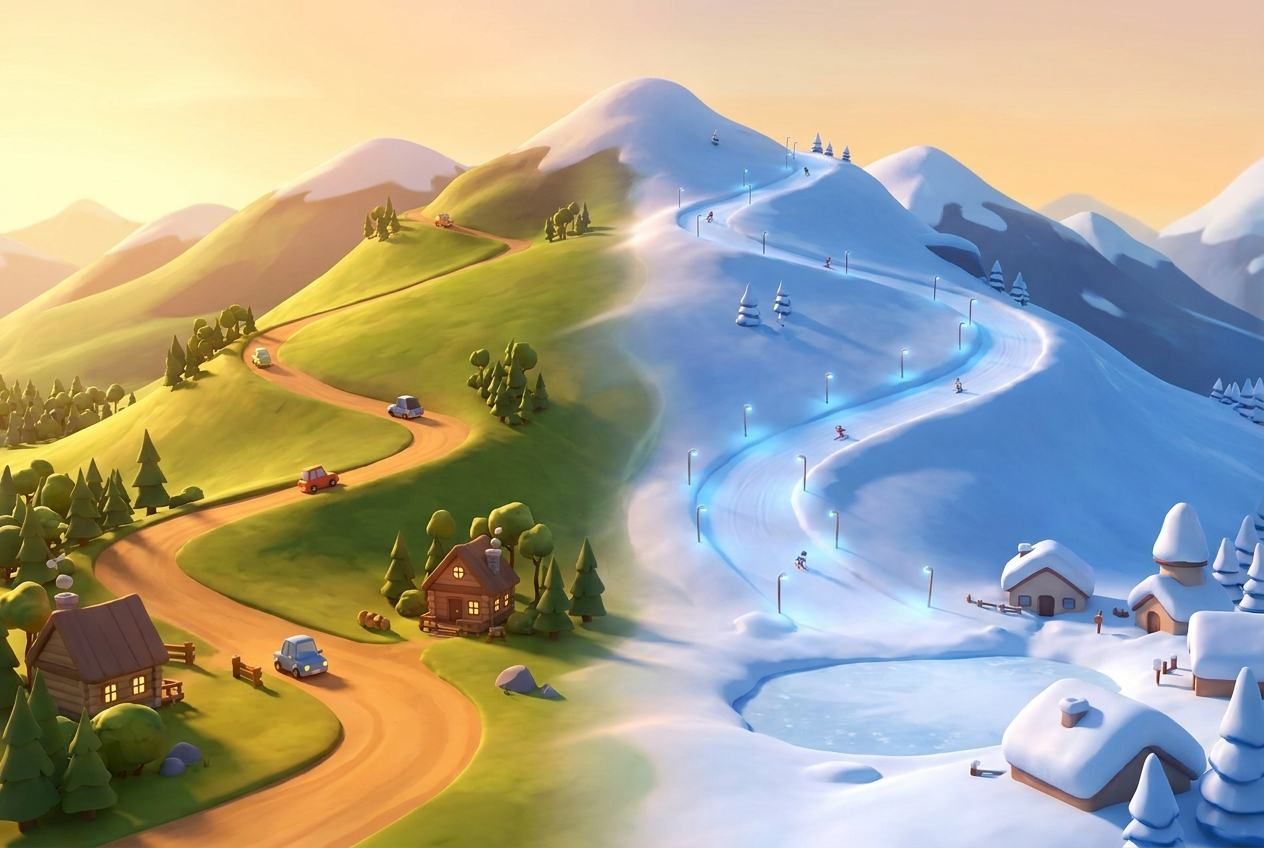
We love this because it's the clearest example we know of a mountain that refuses to be one thing.
In July, the Sarenne is a road. Tarmac, hairpins, 7.3% average, and a peloton of the fittest people on earth suffering their way up it in the heat with the crowds three deep.
In February, the same ground is a piste. Snow, edges, 16 kilometres of black, and you at the top of it wondering whether your quads have another one in them.
Same mountain. Same gradient. Completely different fight. 🚴⛷️
— RSS Team
That duality is a lot of why Alpe d'Huez earned one of the 16 spots in the game. It has been proving itself in two sports, across two seasons, for decades. 300 days of sun a year, and it still holds the longest black in the Alps.
What to Watch For
If you're watching Saturday, a few things worth knowing.
The Galibier comes first, and it's the highest point of the race. Riders who are already cooked will be cooked there, not on the final climb. Watch who's still near the front over the top.
Then the Sarenne. It's shorter than the 21 bends and slightly less steep on paper, but it arrives after 5,450 metres of climbing. Numbers on a profile stop meaning very much by that point.
And then the finish at Alpe d'Huez, for the second day running, which nobody in the race will have experienced before either.
Whoever wins on Saturday will have earned it on ground that, six months from now, will be under a metre of snow and full of people in helmets doing the same descent for fun. Some of them will be unstrapping at the bottom, wishing they'd waxed.
We think that's brilliant.
If You Fancy the Winter Version
You don't need to be a climber to enjoy Alpe d'Huez. The Sarenne is the headline, but it's a big, sunny, varied mountain, and the resort page has the full picture of why it made the game — including what the card looks like and how it plays.
And if you want the whole mountain range on your kitchen table, that's rather the point of what we built. 16 real resorts, one deck, and an argument about which one is best that'll last until the lifts open.
Enjoy the racing. 🎿🏂🃏
– RSS Team