Why we put it in the game
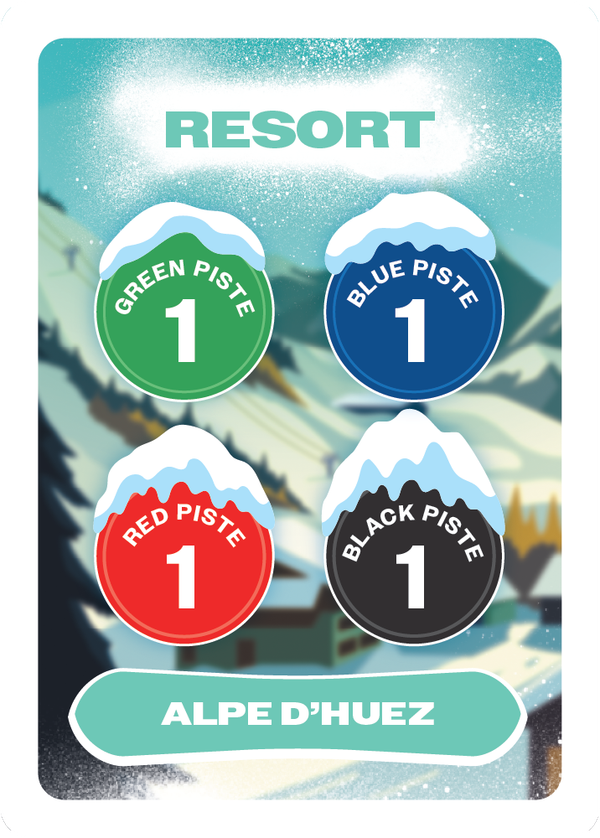
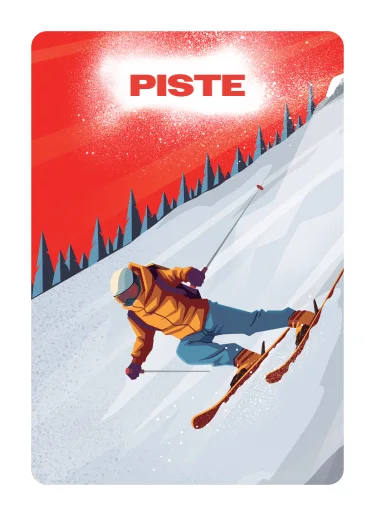
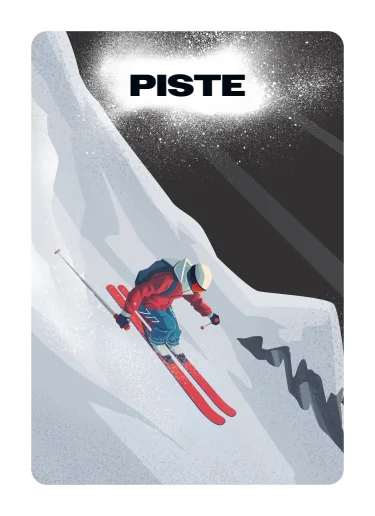
Alpe d'Huez arrives in Ready Steady Slope as the most evenly matched Resort card in the game — one green, one blue, one red and one black. That perfectly balanced profile is a surprisingly accurate portrait of the real mountain: a ski area genuinely designed to cater for every level simultaneously, where a beginner can ride the Signal plateau while their expert companion tackles the glacier couloirs, and both can find their way back to the same restaurant for lunch.
That versatility makes the Alpe d'Huez card a flexible, unpredictable force at the table. Just as the real resort rarely disappoints whoever turns up, the card can adapt to almost any hand — a true all-rounder that rewards players willing to work across all four piste types. When this card comes out, every player has something to aim for.
The Real Alpe D'Huez
In winter, those same switchbacks bring skiers to one of France's biggest and most rewarding ski areas — a vast, snow-sure domain built around the Grandes Rousses massif and crowned by the Pic Blanc glacier at 3,330 metres. Remarkably sunny for a high-altitude French resort, Alpe d'Huez earns its nickname 'the island of sunshine' — with an average of 300 days of sun a year. That light floods the open, wide runs above the resort and illuminates one of the most spectacular panoramas in the Alps. It is a resort that suits almost every level: broad beginner plateaux, long intermediate cruisers and serious glacier terrain all share the same mountain.
The Grandes Rousses massif
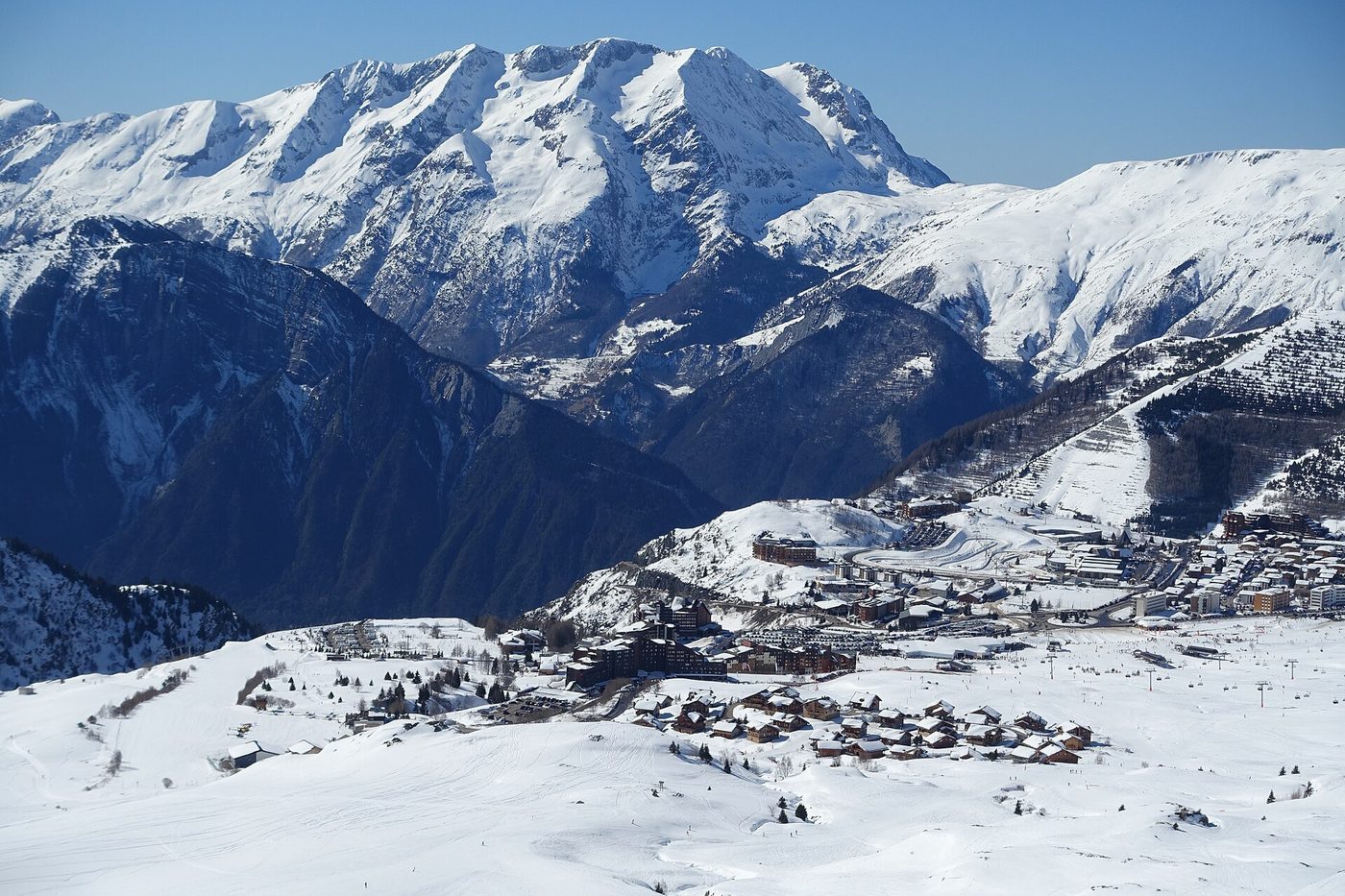
The ski area fans out across four main sectors from a single hub: the Pic Blanc glacier sector, the Villard-Reculas bowl, Signal de l'Homme and the family-friendly Signal plateau. From the Pic Blanc cable car at the top, on a clear day you can see across to Mont Blanc and the Vanoise — a view that makes the long gondola ride feel entirely worthwhile.
The resort's most celebrated run is the Sarenne: at around 16 kilometres, it is the longest black piste in the Alps, a swooping, largely crowd-free descent through the unspoilt Sarenne gorge that deposits skiers at the hamlet of Clavans, far below the resort. It is a bucket-list run and a genuine test of stamina as much as technique.
The terrain & skiing
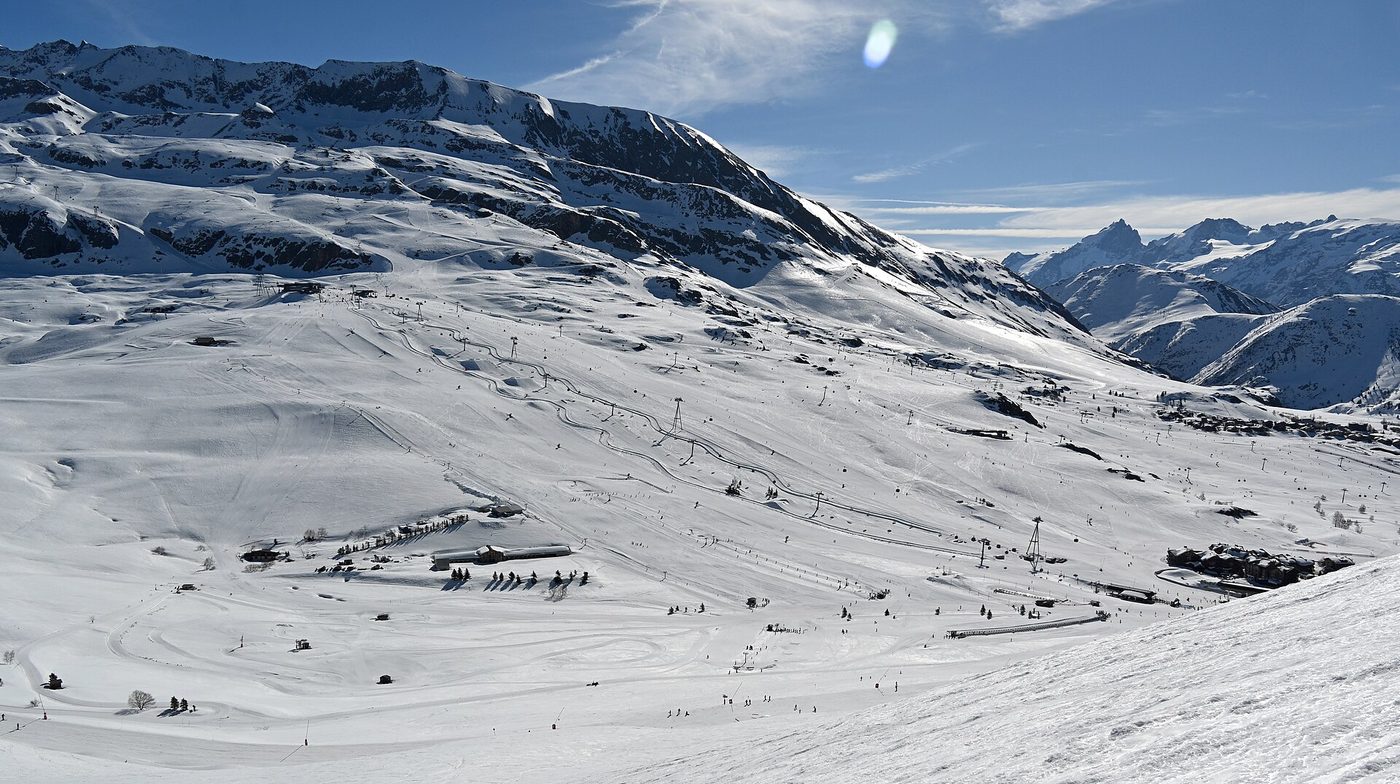
Across the whole Alpe d'Huez domain there are around 102 marked pistes — roughly 18 green, 37 blue, 35 red and 12 black — spread over 249 km of groomed runs. That generous red-to-blue split makes it a superb intermediate mountain, but the blacks (including the Sarenne and the Tunnel couloir off the Pic Blanc glacier) give experts genuine reasons to push themselves.
The Signal plateau at the heart of the ski area is the most accessible zone: wide, open, sun-soaked and ideal for building confidence or warming up the legs. Higher up, the Combe du Rastel and the off-piste routes through the Grandes Rousses attract powder hunters when conditions are right, and the glacier sector above 3,000 metres stays snow-sure even late in the season.
The resort also benefits from substantial snowmaking infrastructure across the lower runs, ensuring reliable coverage even in lean seasons. The 84 lifts — including a fast gondola direct from the town — mean queues are rarely a serious problem outside peak French school holiday weeks.
The resort & beyond the slopes
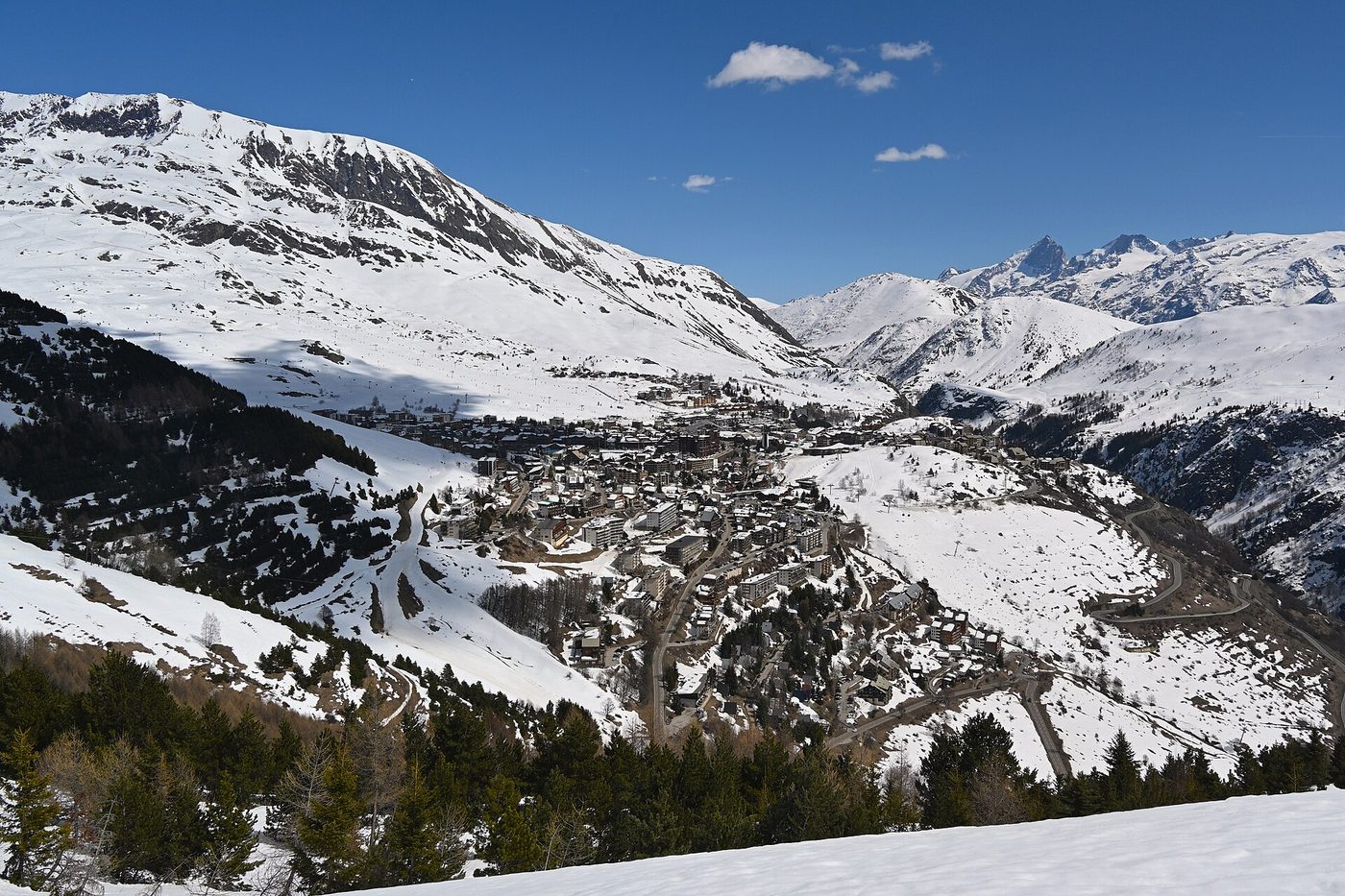
Alpe d'Huez is a purpose-built resort, but one that has matured gracefully. The main strip is lined with restaurants, bars and ski shops, and the après-ski — centred on a cluster of lively bars near the main gondola station — is lively without being overwhelming. There is enough variety in dining, from hearty Oisans specialities to wood-fired pizzas and proper French cuisine, to keep a week interesting.
Off the snow, the area rewards exploration: the Sarenne gorge is walkable in snowshoes, the ice rink in the resort centre offers an easy afternoon, and the drive down the 21 hairpins on a clear winter evening is a jaw-dropping experience in its own right. For summer visitors, the same mountain becomes a world-class cycling destination, completing a year-round identity that few ski resorts can match.
Where is Alpe D'Huez?
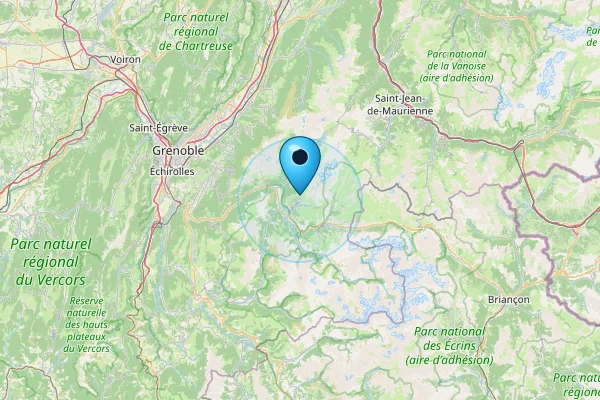
French Alps, France
How to get there
| Nearest airport | Transfer time (by road) |
|---|---|
| 🇫🇷Grenoble (GNB) | ~1 hr 30 min |
| 🇫🇷Lyon (LYS) | ~2 hr |
| 🇨🇭Geneva (GVA) | ~2 hr 30 min |
Graded runs at Alpe D'Huez
The in-game Resort card is a stylized approximation — here are Alpe D'Huez's actual marked pistes by grade.
| Grade | Runs |
|---|---|
| Green (beginner) | 18 |
| Blue (easy) | 37 |
| Red (intermediate) | 35 |
| Black (advanced) | 12 |
| Total | 102 |
Quick facts
Ready to hit the slopes?
With our game you can bring Alpe D'Huez to your table. Click below to find out where to buy, or visit the actual resort. Or even better… do both, and pack the cards for the après!