Why we put it in the game
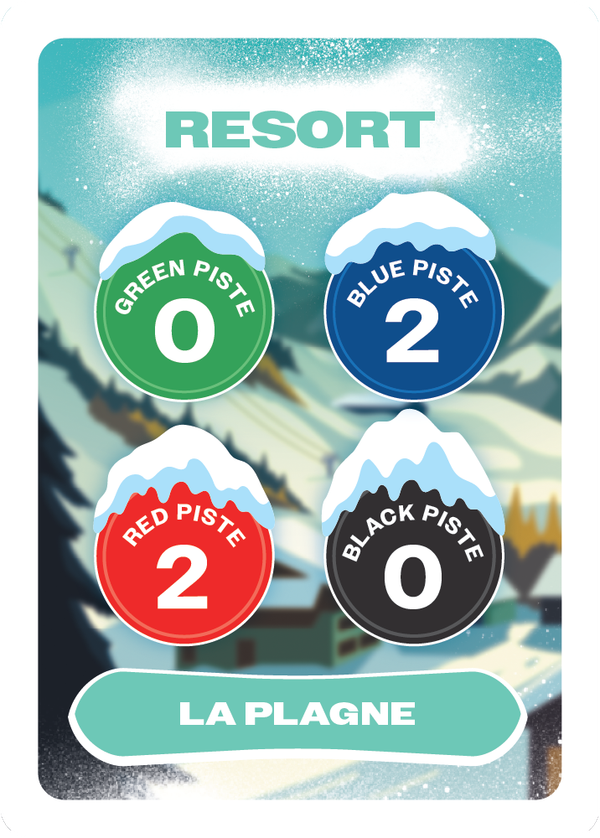
La Plagne's Ready Steady Slope Resort card captures the resort's intermediate-skier soul precisely: no greens, two blues, two reds and no blacks. That mid-range, accessible profile is exactly what La Plagne delivers in reality — a huge, welcoming mountain where the bulk of the runs are cruising blues and lively reds, and where the sheer scale of the terrain means you are unlikely to exhaust it even across a full week.
In play, the La Plagne card is a reliable, consistent performer. Like the resort itself, it will rarely let you down or deliver unpleasant surprises — the blues and reds give it enough scoring versatility to be useful in most situations, without the high-risk, high-reward tension of a black-heavy card. For players who want a solid, dependable option, La Plagne is the card to hold.
The Real La Plagne
Spread across ten separate villages and altitude stations — ranging from the traditional hamlets of Champagny-en-Vanoise and Montchavin at around 1,250 metres up to the purpose-built Plagne Bellecôte at 2,050 metres — it offers an extraordinary breadth of terrain and a choice of bases to suit almost every taste and budget. La Plagne is also part of Paradiski, a combined ski domain linking the resort to Les Arcs via the Vanoise Express cable car. Together the two areas offer around 425 km of pistes, making Paradiski one of the top five linked ski domains in the world by size. But even on its own, La Plagne — with its glacier, its long summit runs and its wide, blue-dominated cruising terrain — is more than most skiers can exhaust in a week.
A ski area built for everyone
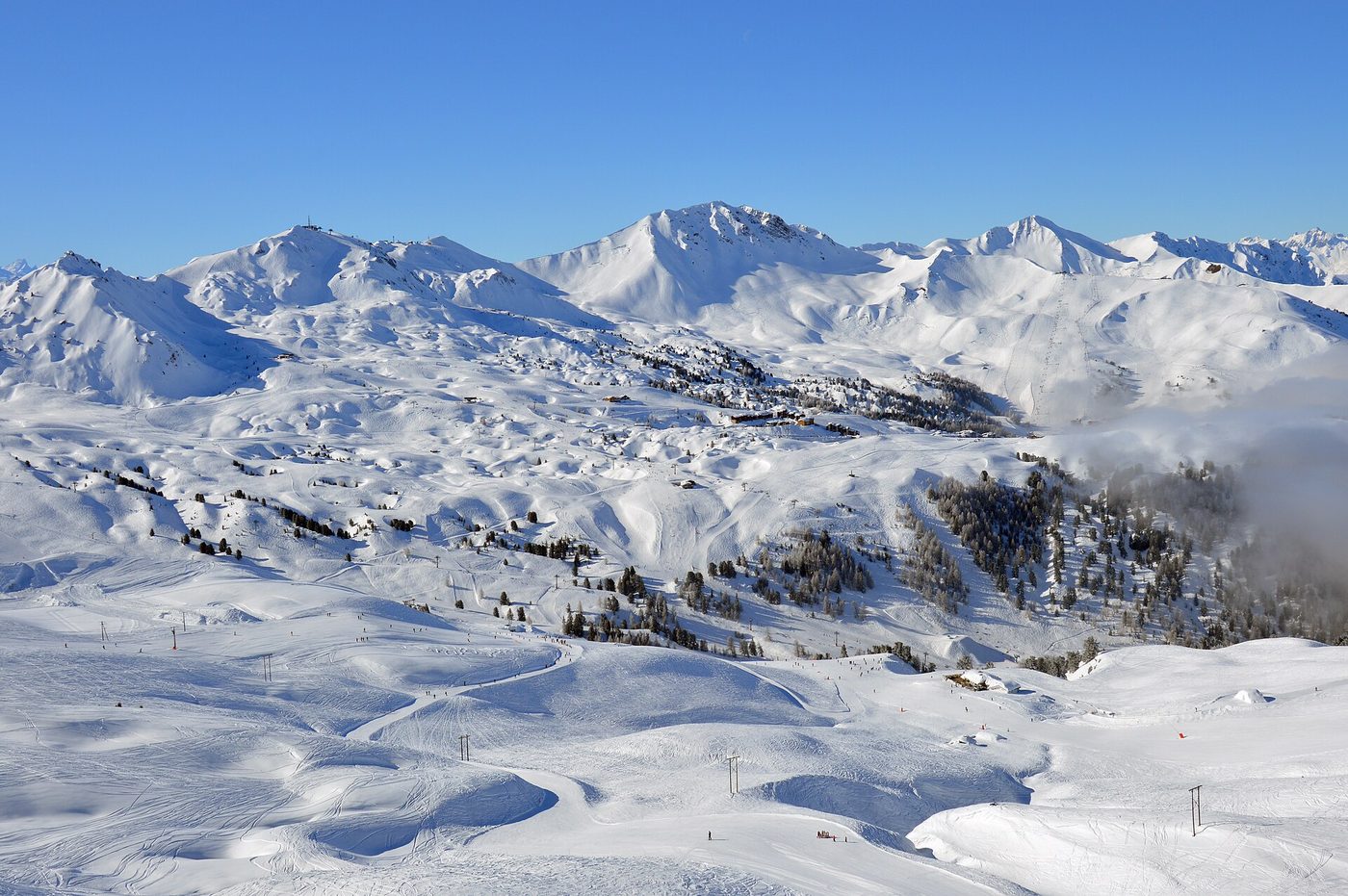
The heart of La Plagne is the Grande Rochette and Roche de Mio summits, both above 2,700 metres, which look across to the great north face of the Bellecôte glacier at 3,250 metres. That glacier is the resort's crown jewel: a broad, north-facing plateau that stays snow-sure even into late spring and offers long, wide descents that can feel almost surreally peaceful on a quiet morning.
Below the summits, the ski area fans out across a series of open bowls and tree-lined valleys, connecting the various La Plagne villages by piste and lift. The layout rewards exploration: different villages reveal different aspects of the mountain, and the variety of terrain across such a large altitude range means there is almost always somewhere to ski well, whatever the conditions.
The terrain & skiing
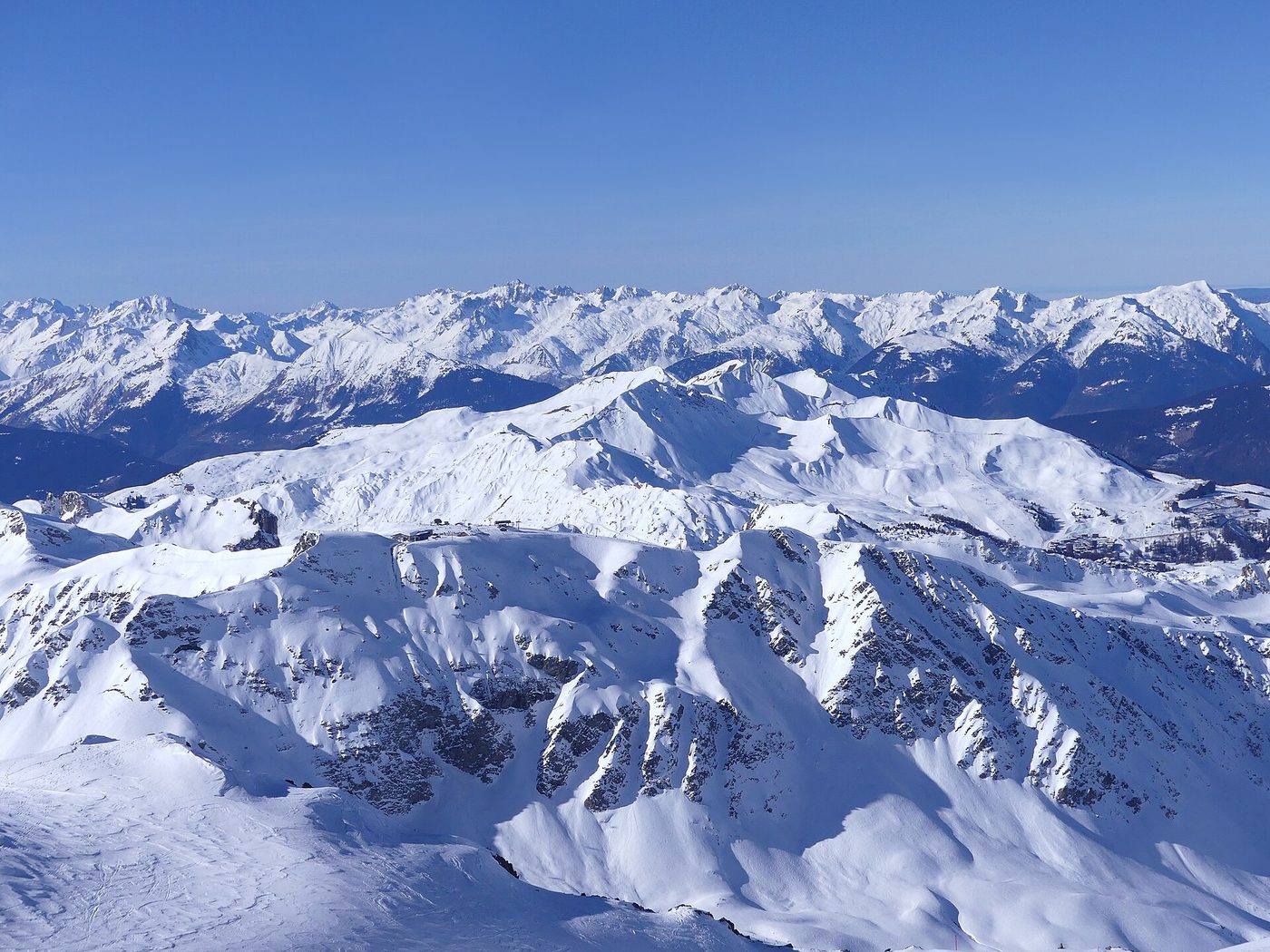
Within the La Plagne ski area (excluding Les Arcs) there are around 130 marked pistes — roughly 18 green, 53 blue, 37 red and 16 black — spread over approximately 225 km of groomed runs. That blue-heavy profile is the honest story of La Plagne: an enormous, intermediate-friendly mountain where the bulk of the skiing is comfortable, confidence-building cruising on wide, well-maintained runs.
The blacks and the glacier terrain around Bellecôte provide the challenging counterpoint: the North Face of Bellecôte drops steeply from 3,250 metres and is one of the most serious in-resort descents in the Tarentaise. The off-piste between the stations, particularly in the Champagny sector and around the Roche de Mio, rewards those who venture beyond the marked runs.
Adding Les Arcs via the Vanoise Express doubles the available terrain and adds a completely different mountain character — steeper, more exposed slopes on the Arc side contrast pleasingly with La Plagne's open bowl skiing. The cable car crossing itself, spanning the Ponturin valley at up to 380 metres above the valley floor, is one of the most dramatic lift rides in the Alps.
The villages & resort character
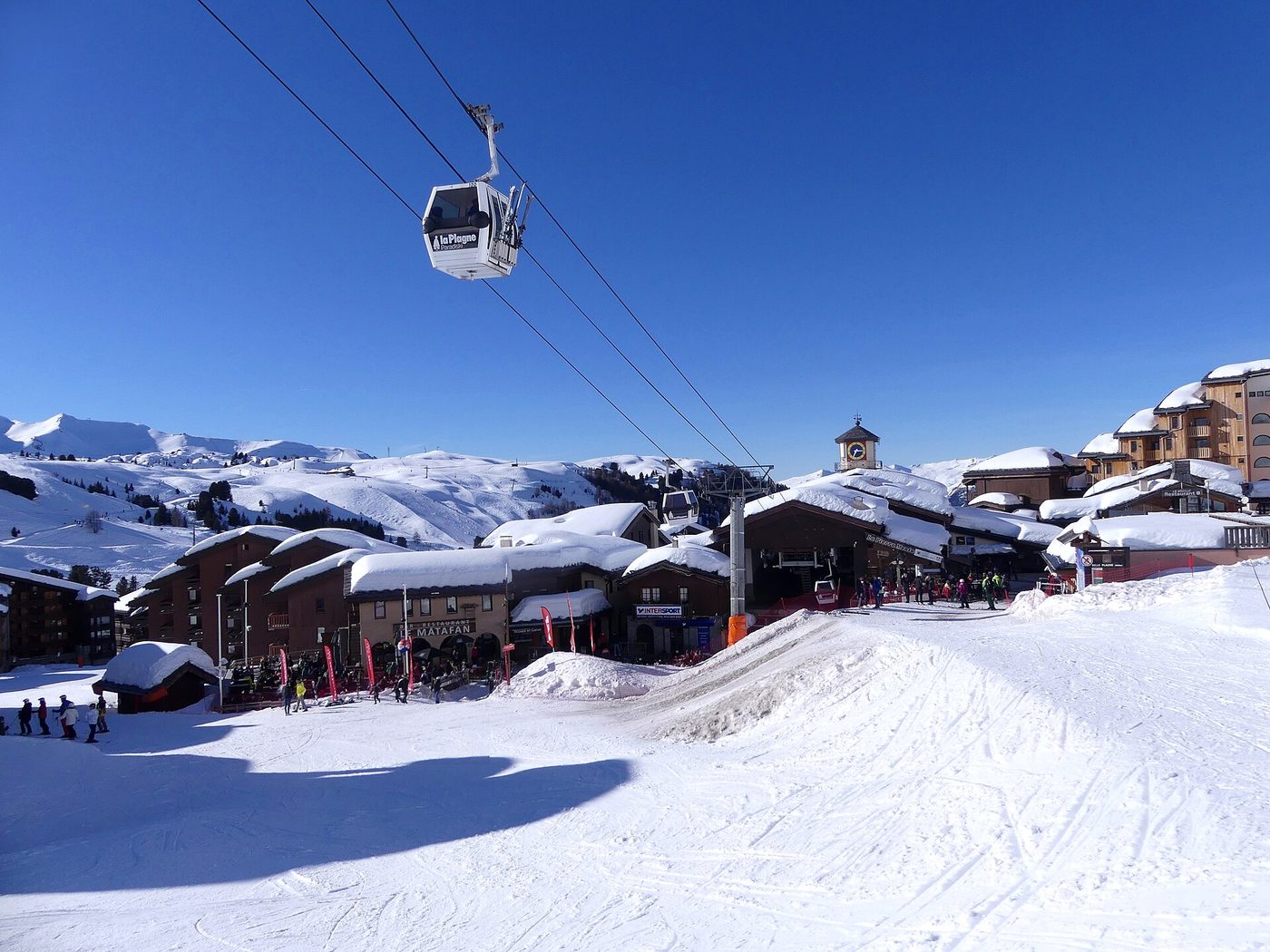
La Plagne's ten villages give it a split personality. The higher, purpose-built stations — Plagne Centre, Plagne Bellecôte, Belle Plagne, Plagne Aime 2000 and Plagne Soleil — are classic 1960s–70s French resort architecture: functional, ski-in ski-out and convenient, if not especially atmospheric. Belle Plagne, rebuilt in a more sympathetic chalet style, is the most charming of the purpose-built stations and has been a model for later Alpine resort development.
The traditional villages at the edges of the domain — Champagny-en-Vanoise, Montchavin, Montalbert and Les Coches — offer a completely different base: stone chalets, local restaurants and a genuine Savoyard feel, with the main ski area accessible by gondola each morning. For those who want to ski the biggest domain in the area without sacrificing mountain village authenticity, these lower villages are an excellent choice.
Where is La Plagne?
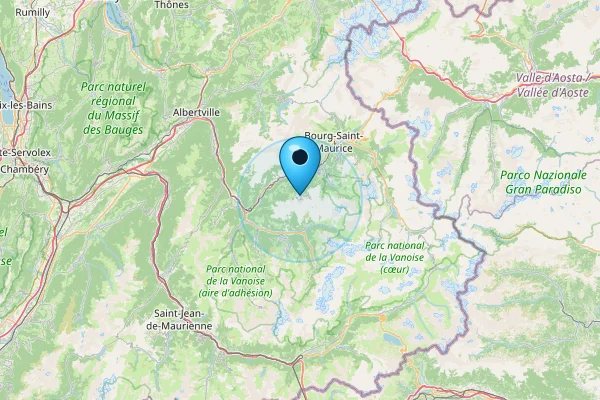
French Alps, France
How to get there
| Nearest airport | Transfer time (by road) |
|---|---|
| 🇫🇷Chambéry (CMF) | ~1 hr 45 min |
| 🇨🇭Geneva (GVA) | ~2 hr 15 min |
| 🇫🇷Lyon (LYS) | ~2 hr 30 min |
Graded runs at La Plagne
The in-game Resort card is a stylized approximation — here are La Plagne's actual marked pistes by grade.
| Grade | Runs |
|---|---|
| Green (beginner) | 18 |
| Blue (easy) | 53 |
| Red (intermediate) | 37 |
| Black (advanced) | 16 |
| Total | 124 |
Quick facts
Ready to hit the slopes?
With our game you can bring La Plagne to your table. Click below to find out where to buy, or visit the actual resort. Or even better… do both, and pack the cards for the après!