French Alps · France
Val Thorens
Val Thorens sits at 2,300 metres above sea level in the Belleville valley, making it the highest ski resort in Europe. That altitude is everything: it means reliable snow from November through to early May, wide open glacier terrain, and a ski area that never feels cheated when lower resorts are struggling.
Why we put it in the game
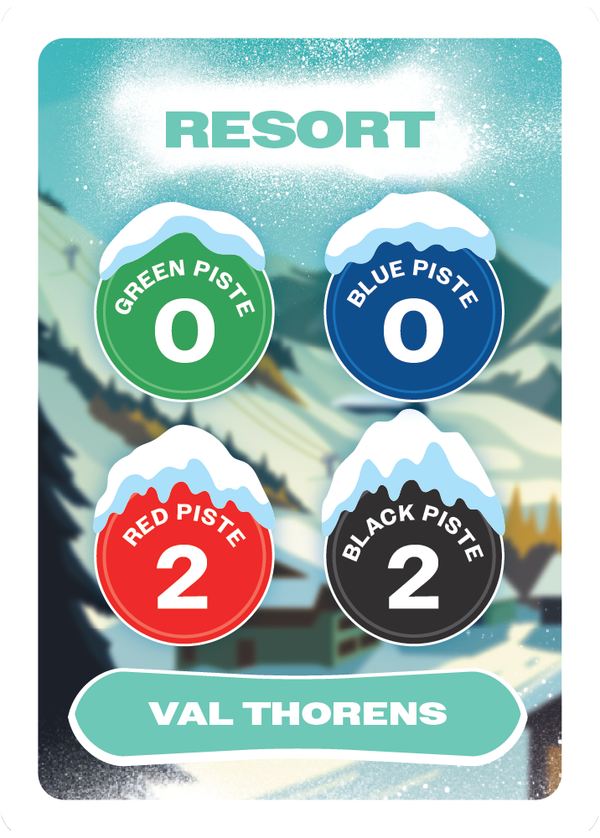
Val Thorens arrives in Ready Steady Slope with one of the most demanding Resort cards in the deck: no greens, no blues, just two reds and two blacks. In truth, the card is tougher than the mountain — Europe's highest resort grooms plenty of wide, confidence-building blues alongside its serious terrain — but with sixteen resorts to balance, good gameplay demanded that some cards skew steep. Few resorts wear that role more credibly than the one that sits above the weather and commands the top of the 3 Vallées.
In play, the Val Thorens card is one of the toughest in the box, and that means it sits at the sharp end of any hand. Just as the real resort rewards strong skiers with its glacier terrain, big verticals and Cime de Caron descents, the card rewards players willing to take on higher-risk plays. Altitude breeds confidence — and in Ready Steady Slope, this card earns its reputation.
The Real Val Thorens
Built specifically for skiing in the 1970s, Val Thorens is unapologetically a skiers’ resort, designed around the mountain rather than centuries of village life. It sits at the top of the Les Trois Vallées — the vast 3 Vallées interconnected ski area that also encompasses Courchevel and Méribel — giving skiers immediate access to one of the largest linked ski domains in the world. The resort itself is compact and walkable, with the lifts, accommodation and mountain restaurants all clustered together on a single sunny bowl that looks south towards the highest peaks in the range.
Europe's highest ski playground
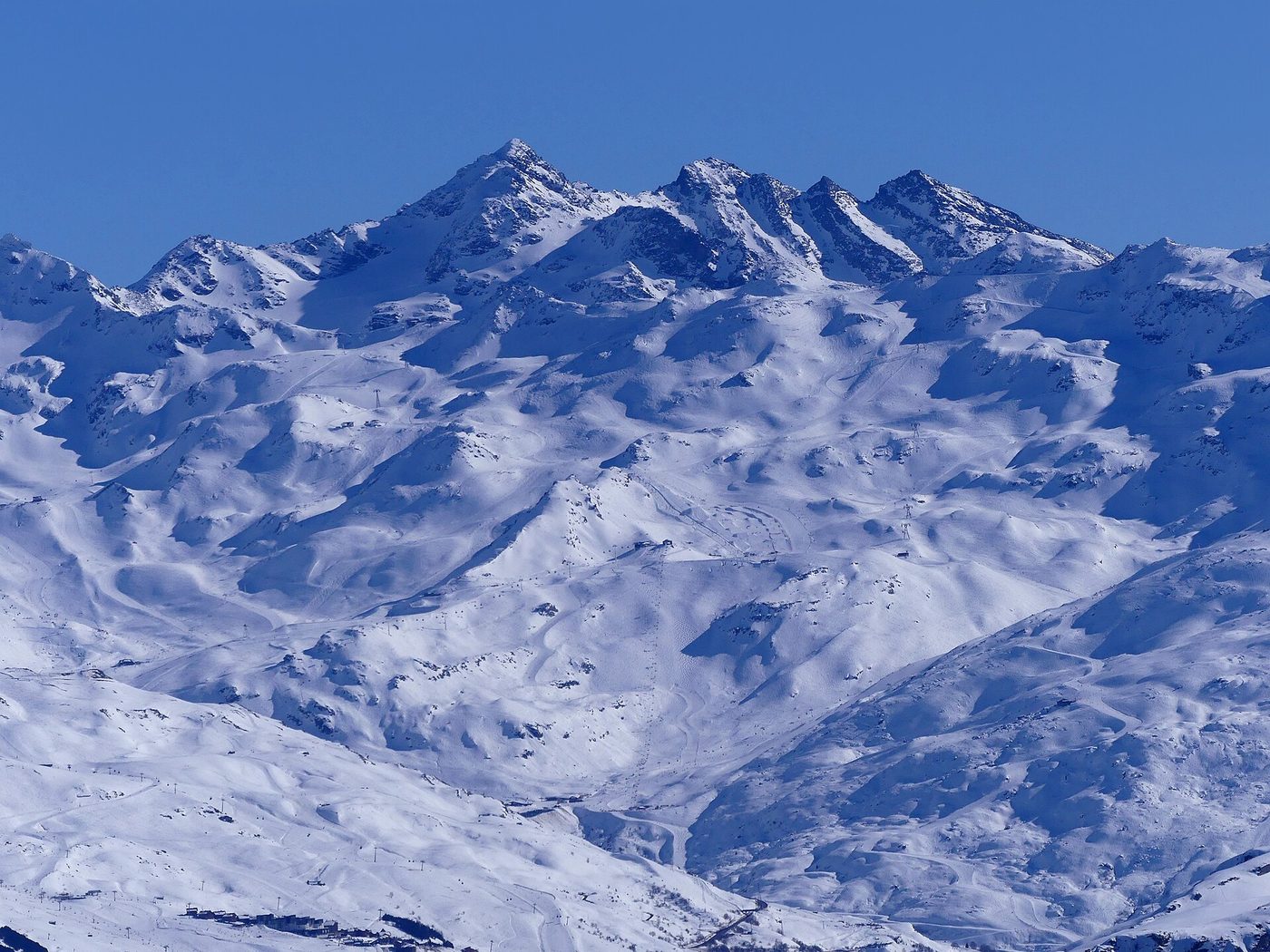
At 2,300 metres, Val Thorens commands a position above most of the weather that plagues lower resorts. The ski area climbs to over 3,200 metres at the Cime de Caron, served by a large cable car that whisks skiers up from the resort in minutes. From the top, the panorama stretches across the entire Les Trois Vallées network and deep into the surrounding peaks — on a clear day it is one of the great views in the Alps.
The Glacier de Péclet adds genuine high-mountain skiing to the mix: a broad, smooth expanse of snow that opens up beginner-friendly terrain at altitude and remains skiable late into spring when the lower slopes have softened. Skiing on a glacier at the heart of a major resort gives Val Thorens a character that even its three-valley neighbours cannot quite match.
The terrain & skiing
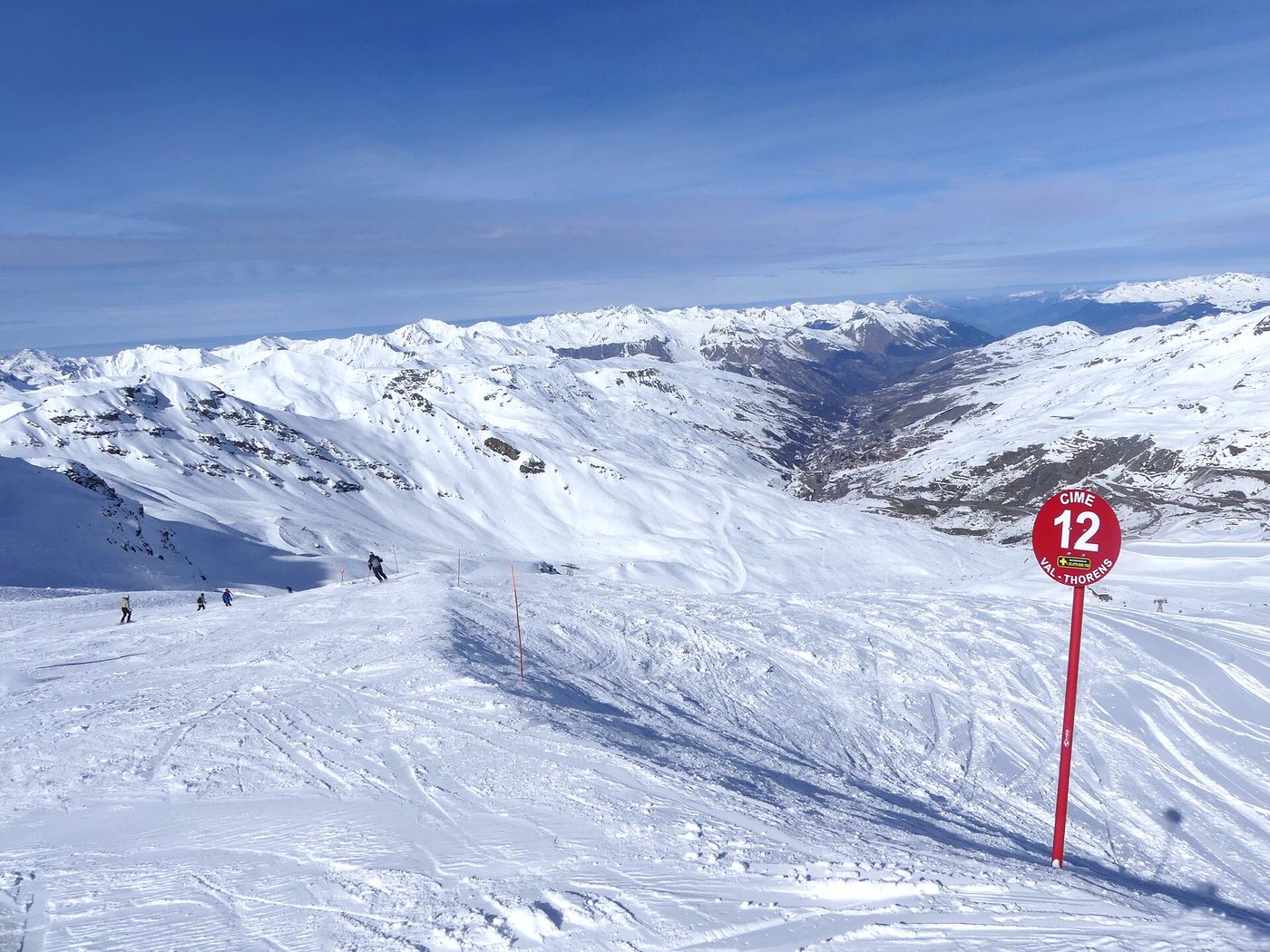
Val Thorens' own ski area counts around 150 kilometres of piste spread across roughly 85 marked runs — approximately 13 green, 29 blue, 38 red and 5 black, according to the resort's own classifications. That red-dominant spread tells the story: this is primarily an intermediate mountain, with long, wide cruising runs dropping down the bowl into the resort and steeper faces rising above towards the glacier and the Cime de Caron.
The Col de l'Audzin red, dropping from beneath the Cime de Caron, is one of the great piste runs in the Alps: a broad, high-altitude descent of over 1,000 vertical metres with rolling terrain and consistent pitch that suits confident intermediates perfectly. For experts, the steep faces and off-piste terrain off the Caron cable car provide a serious challenge, while beginners are well looked after on the glacier plateau and the gentle runs back to the resort.
Through the 3 Vallées pass, the entire linked network opens up — over 600 kilometres of piste connecting Val Thorens to Méribel, Courchevel and beyond. Ambitious skiers can complete circuits of the whole domain in a day, skiing in and out of different valleys before returning to base.
The resort & après-ski
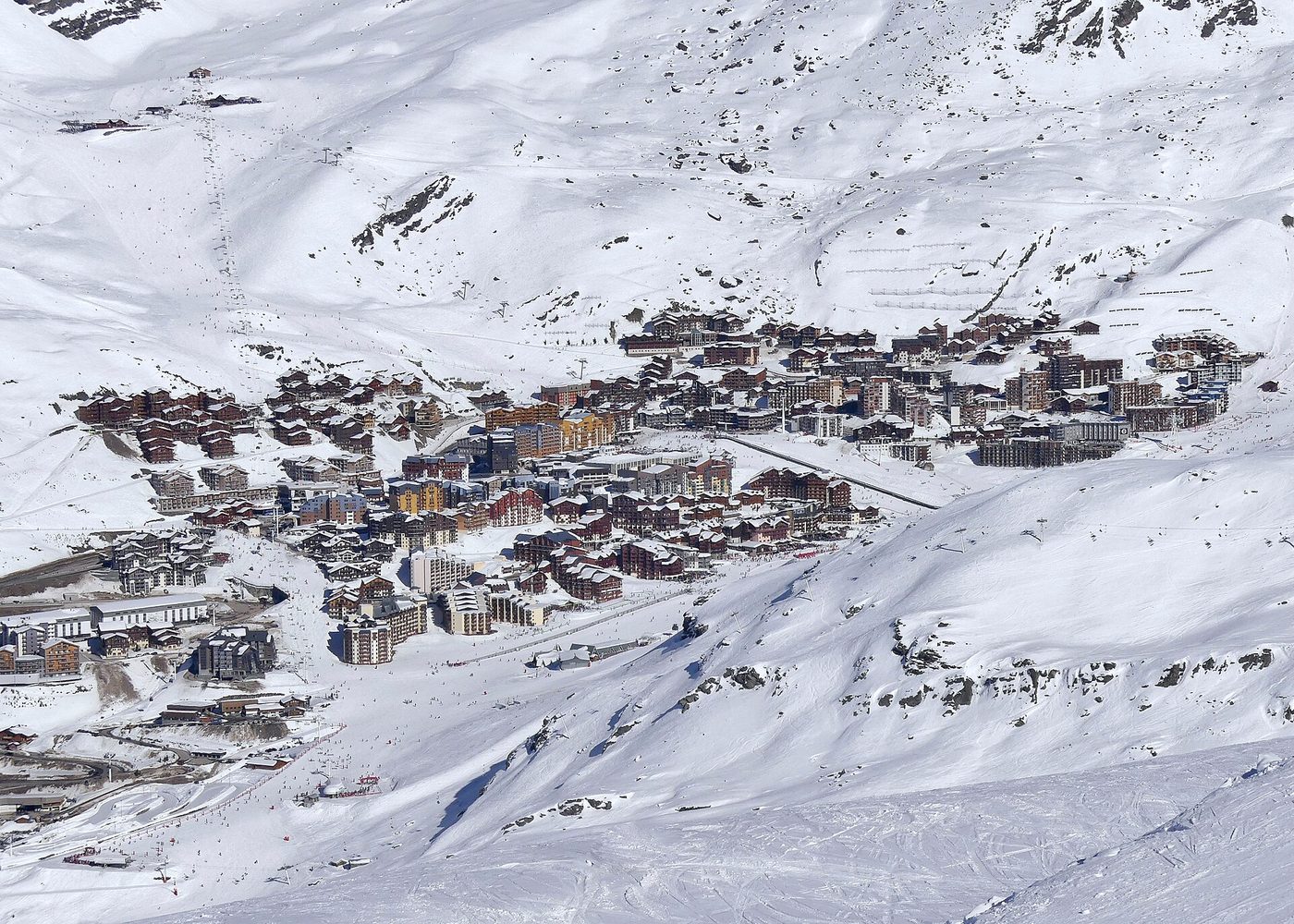
Val Thorens is a purpose-built resort and that shows in its layout — everything is oriented around maximum ski convenience rather than organic village growth. The result is an efficient, dense cluster of apartments, hotels and chalets arranged in a horseshoe around the main ski lifts, making it ski-in ski-out from almost anywhere. It is not the most architecturally refined village in the Alps, but its altitude and convenience keep its loyal following coming back season after season.
Après-ski runs hard from the moment the lifts stop. The resort has a strong reputation for a lively mountain-hut scene on the slopes, carrying on into a busy selection of bars and restaurants in the resort itself. The Folie Douce, the famous mountain-restaurant-meets-outdoor-festival concept, has a flagship here that puts Val Thorens' après at the top of the French Alps pecking order.
Where is Val Thorens?
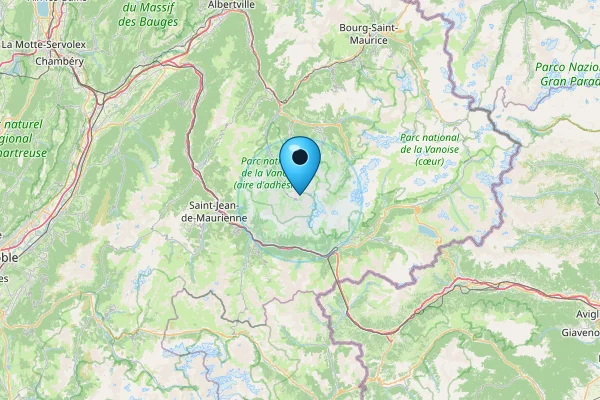
French Alps, France
How to get there
| Nearest airport | Transfer time (by road) |
|---|---|
| 🇫🇷Chambéry (CMF) | ~2 hr |
| 🇨🇭Geneva (GVA) | ~2 hr 30 min |
| 🇫🇷Lyon (LYS) | ~2 hr 30 min |
Graded runs at Val Thorens
The in-game Resort card is a stylized approximation — here are Val Thorens's actual marked pistes by grade.
| Grade | Runs |
|---|---|
| Green (beginner) | 13 |
| Blue (easy) | 29 |
| Red (intermediate) | 38 |
| Black (advanced) | 5 |
| Total | 85 |
Quick facts
Ready to hit the slopes?
With our game you can bring Val Thorens to your table. Click below to find out where to buy, or visit the actual resort. Or even better… do both, and pack the cards for the après!