Why we put it in the game
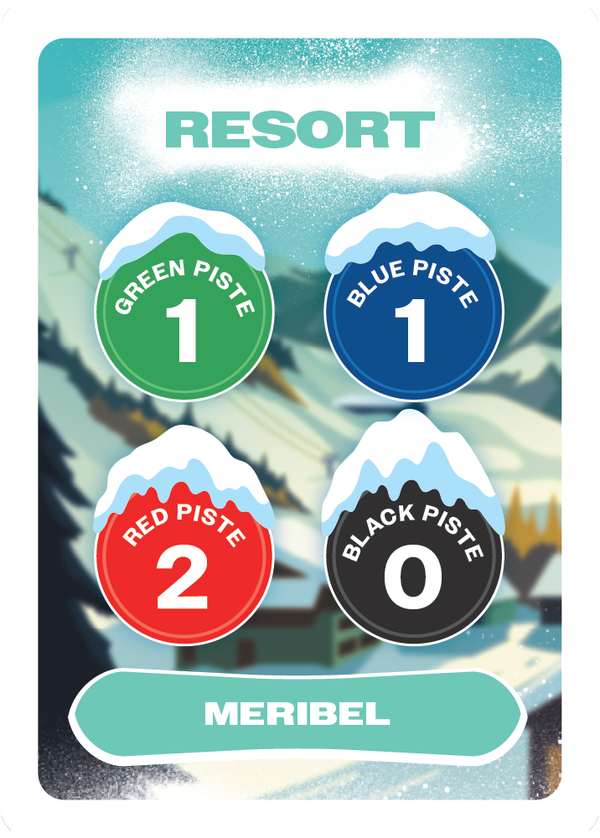
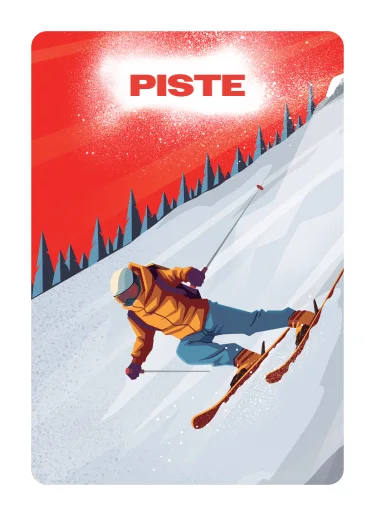
Méribel's Ready Steady Slope Resort card reflects its position as the all-rounder of the 3 Vallées trio: one green, one blue, two reds and no blacks. That graded spread — heavier on the middle difficulties, with a green representing the accessible terrain and the reds capturing the resort's intermediate heart — mirrors the real Méribel experience. It is a resort that welcomes almost every ability without dumbing itself down.
In play, the Méribel card is the balanced choice in any hand containing the three-valley trio. Where Val Thorens brings black-heavy challenge and Courchevel brings accessible blues, Méribel sits squarely in the middle — versatile, consistent and dependable. That is exactly what the real resort offers: a central location, excellent terrain across the range and a character that suits almost anyone who skis.
The Real Meribel
That central position is not incidental: it makes Méribel the natural hub of the whole network. From here, the entire 600-plus kilometres of linked piste is accessible in both directions, and the resort draws skiers who want to explore the whole domain without committing to either end of it. The resort itself was founded by a Scottish colonel, Peter Lindsay, in 1938 and built under strict planning rules that have preserved a consistent chalet-style architecture across all its villages. Méribel, Méribel-Mottaret and the outlying hamlets share a warm, wood-and-stone aesthetic that most purpose-built French resorts never managed. It is one of the best-looking major resorts in the French Alps — and it sits on a mountain that is as good as it looks.
At the heart of the 3 Vallées
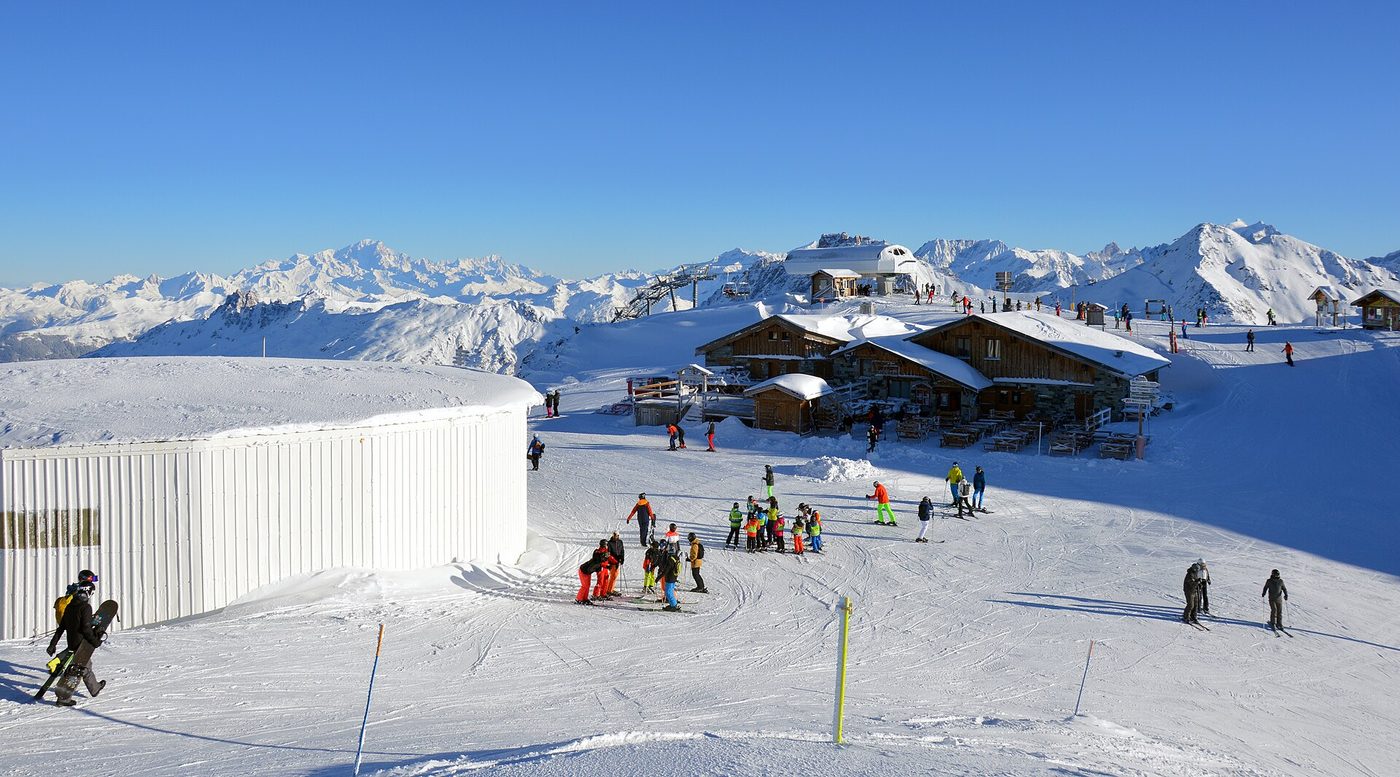
From the Col de la Loze and the Saulire summit ridge above Méribel, the 3 Vallées spreads out in both directions in a way that few other viewpoints can match. Courchevel's valleys drop away to the west; Val Thorens' high bowl opens to the south-east. The connecting lifts and pistes are direct and fast, making Méribel the most efficient base from which to access the full extent of the linked area.
The top of the Méribel ski area sits above 2,700 metres at the Saulire. The Col de la Loze — reached by a high-speed gondola introduced in 2019 — adds even higher terrain and further shortens the trip across to Courchevel. This summit infrastructure gives Méribel a high-altitude, snow-sure quality that its middle-valley position might not immediately suggest.
The terrain & skiing
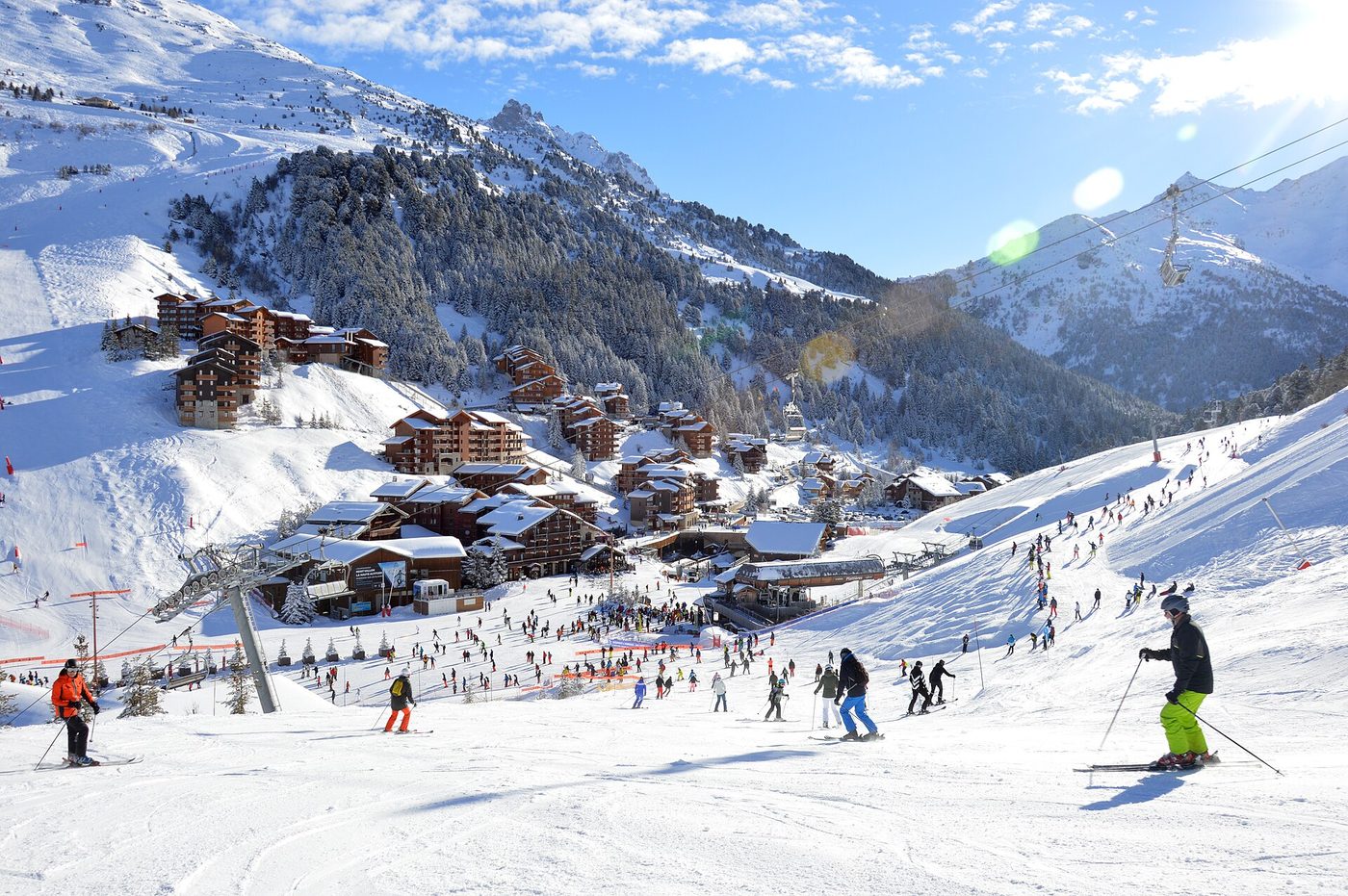
Méribel's own ski area contains around 50 marked pistes — approximately 5 green, 17 blue, 21 red and 7 black across the valley's two main lift-served areas. That red-dominant profile suits confident intermediates well: long, rolling descents back through the trees to the village, open cruising above the treeline and enough variation to keep even experienced skiers interested across a full week without ever leaving the Méribel sector.
The runs from the Saulire and Tougnète ridges down towards Méribel-Centre and Mottaret are some of the most satisfying in the 3 Vallées — wide-open at the top, narrowing through trees lower down, with the chalet-roofline of the village coming into view as you approach the lift station. The Olympic downhill course from the 1992 Albertville Games runs through this terrain, a reminder that these are serious, properly graded mountain slopes.
For those who want more, the connection to Courchevel across the Saulire is swift and well-served, and the link through Mottaret towards Val Thorens is straightforward. Méribel is the one resort in the 3 Vallées where you genuinely never feel penned in.
The village & après-ski
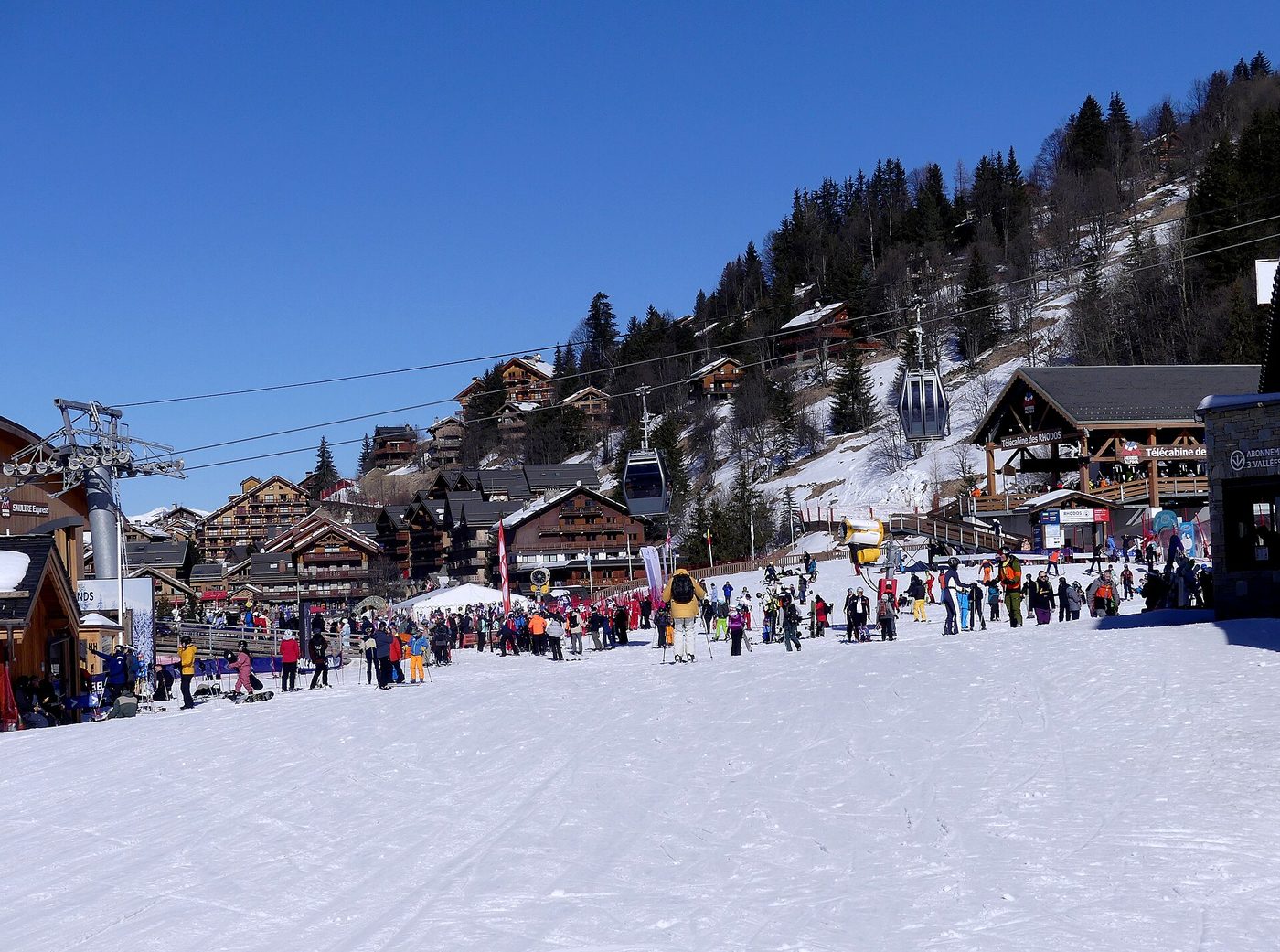
Méribel-Centre is an unusually good-looking ski resort. The planning rules that Colonel Lindsay insisted upon in the 1940s — all buildings in local stone or larch, rooflines at consistent pitches — have created a cohesive mountain village that feels genuinely lived-in. The tree-lined approach road, the central square and the mix of chalets and smaller hotels give it an atmosphere closer to an Alpine village than a purpose-built French station.
Après-ski is relaxed rather than raucous: a selection of bar-restaurants on the main street, mountain huts accessible on the piste for early-evening drinks, and enough variety in the dining scene to suit both families and groups looking for a livelier evening. The Rond-Point, a slope-side terrace bar, is a Méribel institution at the end of the ski day. For a quieter base with direct lift access to the heart of the valley, Méribel-Mottaret offers ski-in ski-out convenience and a more peaceful atmosphere.
Where is Meribel?
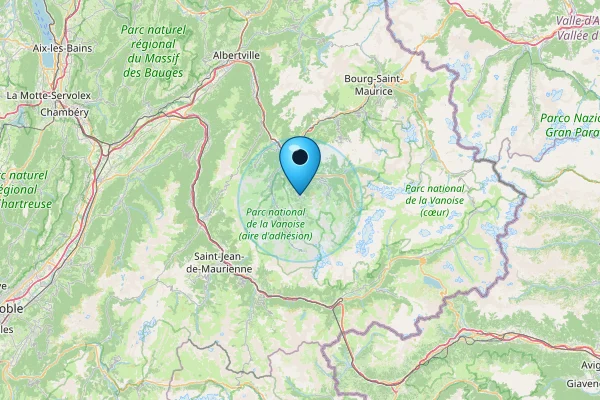
French Alps, France
How to get there
| Nearest airport | Transfer time (by road) |
|---|---|
| 🇫🇷Chambéry (CMF) | ~1 hr 30 min |
| 🇨🇭Geneva (GVA) | ~2 hr |
| 🇫🇷Lyon (LYS) | ~2 hr 15 min |
Graded runs at Meribel
The in-game Resort card is a stylized approximation — here are Meribel's actual marked pistes by grade.
| Grade | Runs |
|---|---|
| Green (beginner) | 5 |
| Blue (easy) | 17 |
| Red (intermediate) | 21 |
| Black (advanced) | 7 |
| Total | 50 |
Quick facts
Ready to hit the slopes?
With our game you can bring Meribel to your table. Click below to find out where to buy, or visit the actual resort. Or even better… do both, and pack the cards for the après!