Why we put it in the game
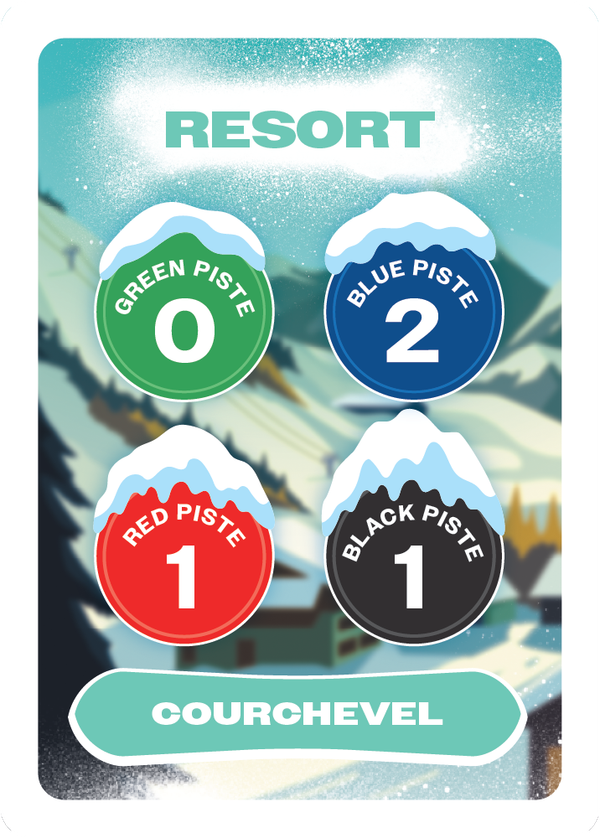
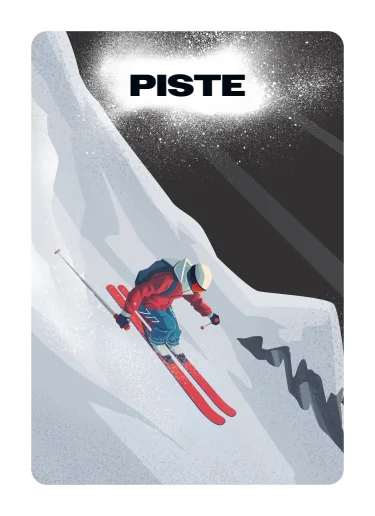
Courchevel's Ready Steady Slope Resort card reflects the resort's well-rounded, intermediate-friendly profile: no green runs, two blues, a red and a black. That balanced mix, leaning toward the accessible end, mirrors what Courchevel does best — impeccably groomed cruising terrain that suits a wide range of abilities, with enough challenge at the top end to keep strong skiers honest.
On the table, Courchevel is a reliable, versatile card with a manageable piste profile — much like the real resort, which delivers a dependable, high-quality ski experience without the extreme top-heaviness of some of its 3 Vallées neighbours. It is a card that fits comfortably into many hands, just as the real Courchevel accommodates almost every level of skier who arrives on its impeccably prepared slopes.
The Real Courchevel
Sitting in the Tarentaise valley of Savoie, it spans five distinct villages from 1,100 metres up to the flagship Courchevel 1850, now officially renamed Courchevel simply. Together they form a single ski domain that serves every level, from wide beginner greens to serious couloirs for experts. From the top of the Belleville valley's western wall, Courchevel also forms the gateway into the 3 Vallées — Les Trois Vallées — the vast interconnected ski area that also encompasses Méribel and Val Thorens. From here, the entire network's 600-plus kilometres of piste is accessible on a single lift pass, making Courchevel one of the most strategically located bases in the Alps for exploratory skiers.
The Courchevel ski area
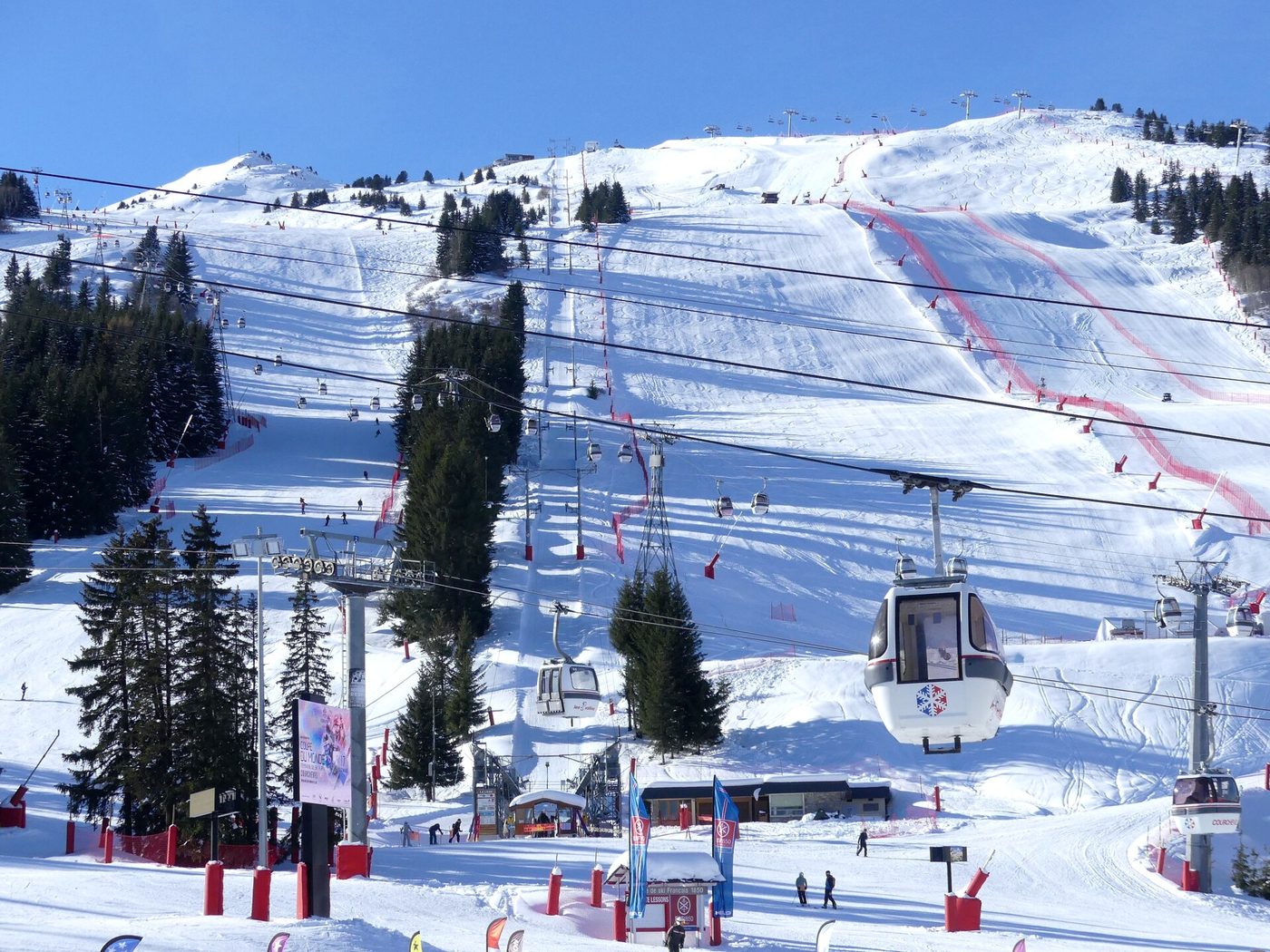
The Courchevel valley itself covers a substantial ski area, with runs descending from the Saulire summit at over 2,700 metres down to the lowest villages. The mountain divides naturally into sectors: the high, north-facing faces off the Saulire and the gentler, tree-lined runs of the Loze and Chenus areas lower down. The variety of terrain across those sectors is one of Courchevel's greatest strengths — an expert heading for the steep Jockeys couloirs and a beginner on the wide Bellecôte green are using the same mountain, just different faces of it.
The famous Jardin Alpin and the pistes beside the Croisette are among the most photographed beginner and easy-intermediate terrain in the Alps. The wide, perfectly groomed blue and green runs here, backed by the sharp ridgeline above, define the Courchevel experience for many first-time visitors — impeccable preparation, reliable snow and stunning alpine scenery all at once.
The terrain & skiing
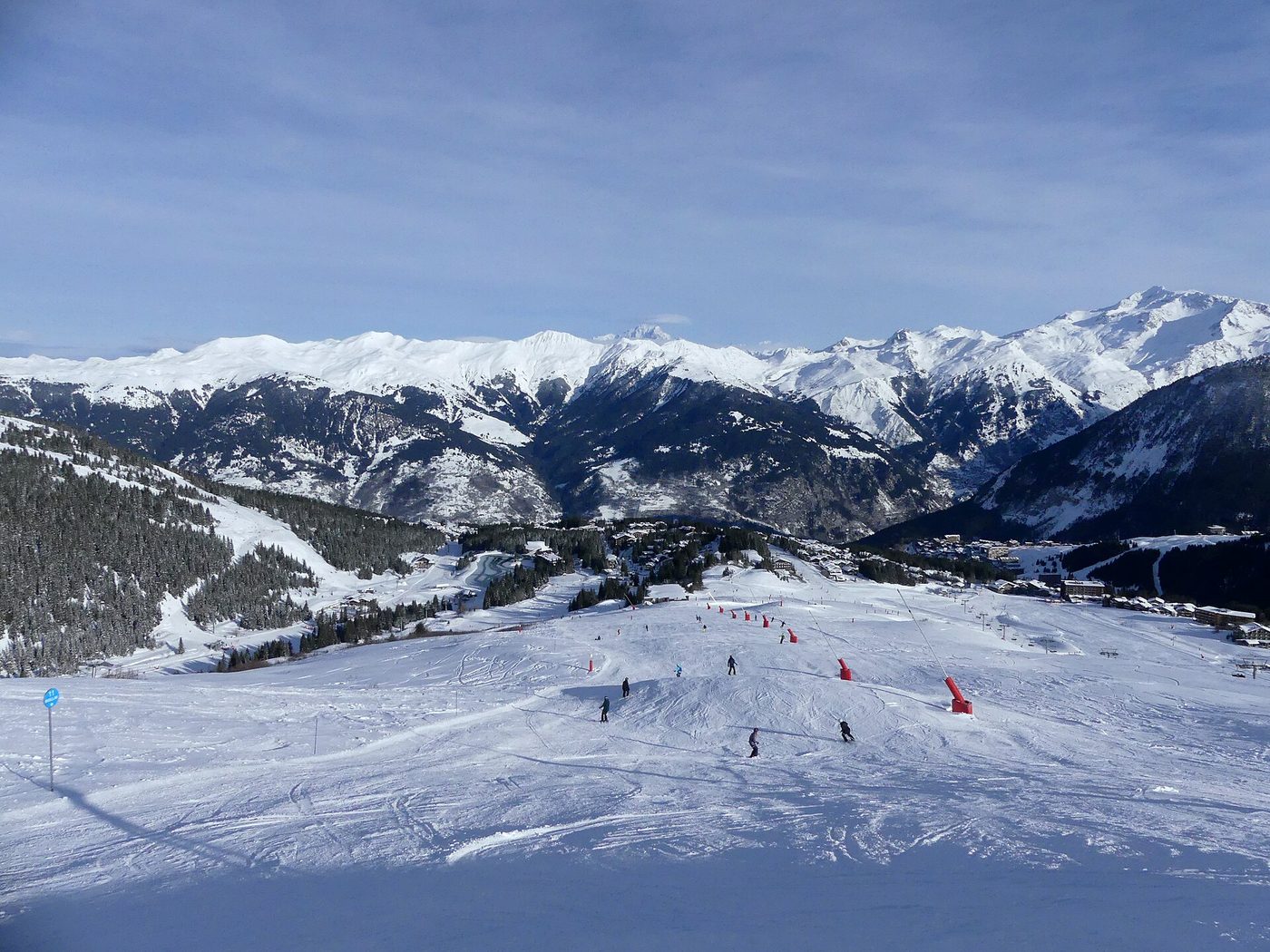
Within the Courchevel valley there are around 67 marked pistes across all sectors — roughly 17 green, 29 blue, 18 red and 3 black. That blue-dominant spread reflects the resort's reputation as an outstanding intermediate destination: long, beautifully groomed cruisers that let skiers build rhythm and confidence across a wide variety of terrain. The three blacks are no pushovers — the Suisses and Jockeys runs are genuine tests — but they are balanced by a huge volume of excellent blue and red skiing.
From the Saulire top, the link into Méribel opens up across the ridge, and from there the whole 3 Vallées network beckons. Ambitious skiers can traverse the entire domain in a day — starting in Courchevel, crossing into Méribel, continuing through to Val Thorens and returning — covering over 100 kilometres of piste without repetition. It is a route that represents some of the finest lift-linked skiing anywhere on earth.
For those staying closer to home, the tree-lined runs of the Chenus sector are a favourite in bad weather, while the high Saulire and Grand Couloir areas provide enough expert challenge to keep strong skiers occupied for an entire week.
The village & beyond the slopes
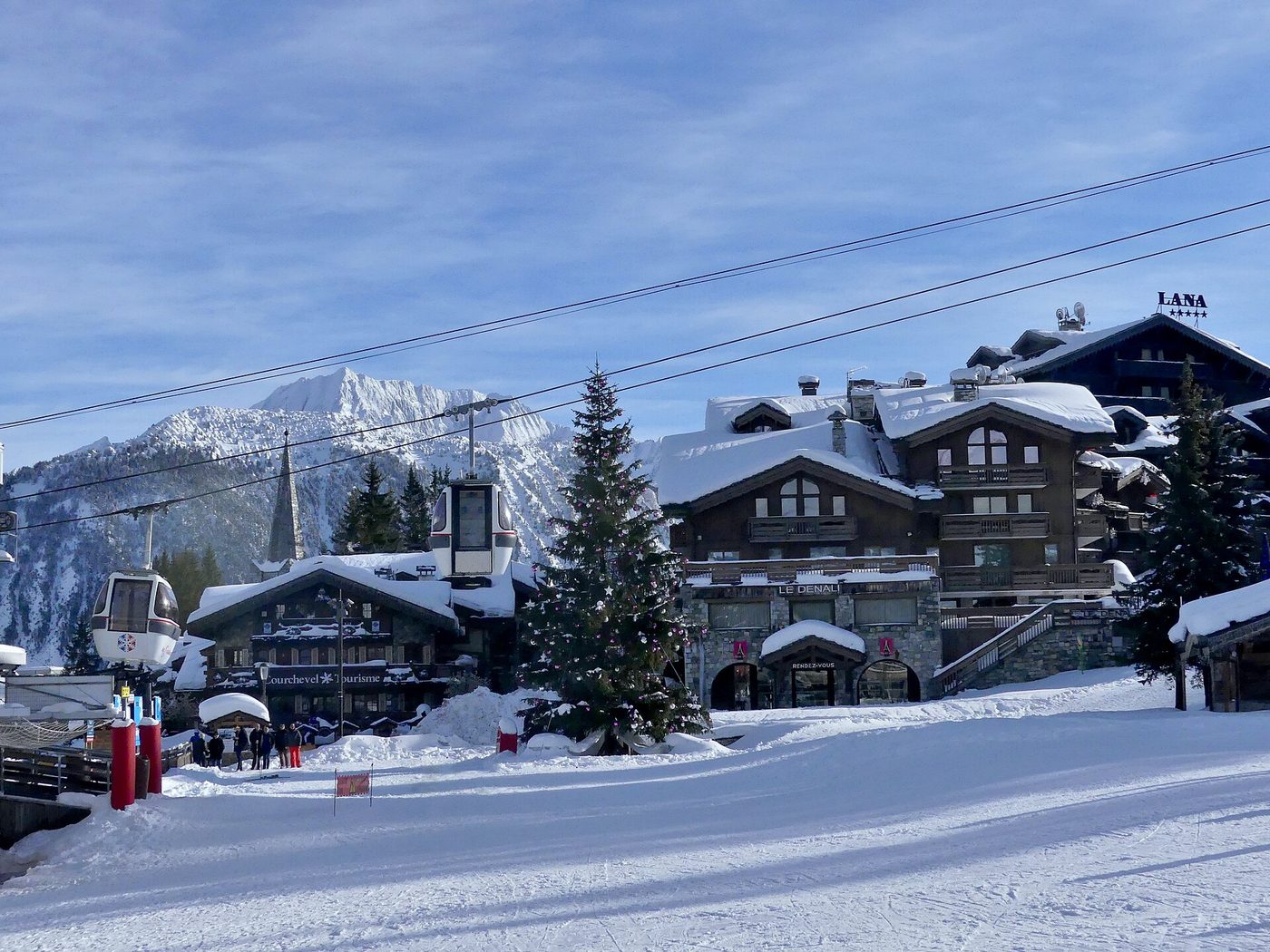
Courchevel 1850 — the highest and best-known of the five villages — has long been associated with high-end skiing. It is home to more Michelin-starred restaurants than almost any other ski resort in the world, a string of flagship luxury hotels and an après-ski scene that runs from slope-side champagne bars to low-key mountain huts, depending entirely on the company you keep. It is the kind of resort where a quiet family holiday and an extravagant celebration can co-exist on the same hillside without either feeling out of place.
The lower villages — 1650, 1550, Le Praz and Saint-Nicolas-de-Véroce — offer a more relaxed, less wallet-intensive base while still accessing the same ski area via a comprehensive intra-valley lift system. Le Praz, the original village, has genuine Alpine charm with a proper central square and a bobsleigh run from the 1992 Winter Olympics.
Where is Courchevel?
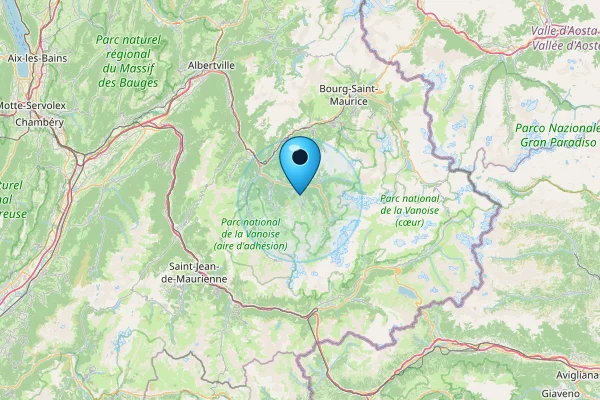
French Alps, France
How to get there
| Nearest airport | Transfer time (by road) |
|---|---|
| 🇫🇷Chambéry (CMF) | ~1 hr 45 min |
| 🇨🇭Geneva (GVA) | ~2 hr 15 min |
| 🇫🇷Lyon (LYS) | ~2 hr 30 min |
Graded runs at Courchevel
The in-game Resort card is a stylized approximation — here are Courchevel's actual marked pistes by grade.
| Grade | Runs |
|---|---|
| Green (beginner) | 17 |
| Blue (easy) | 29 |
| Red (intermediate) | 18 |
| Black (advanced) | 3 |
| Total | 67 |
Quick facts
Ready to hit the slopes?
With our game you can bring Courchevel to your table. Click below to find out where to buy, or visit the actual resort. Or even better… do both, and pack the cards for the après!