Why we put it in the game
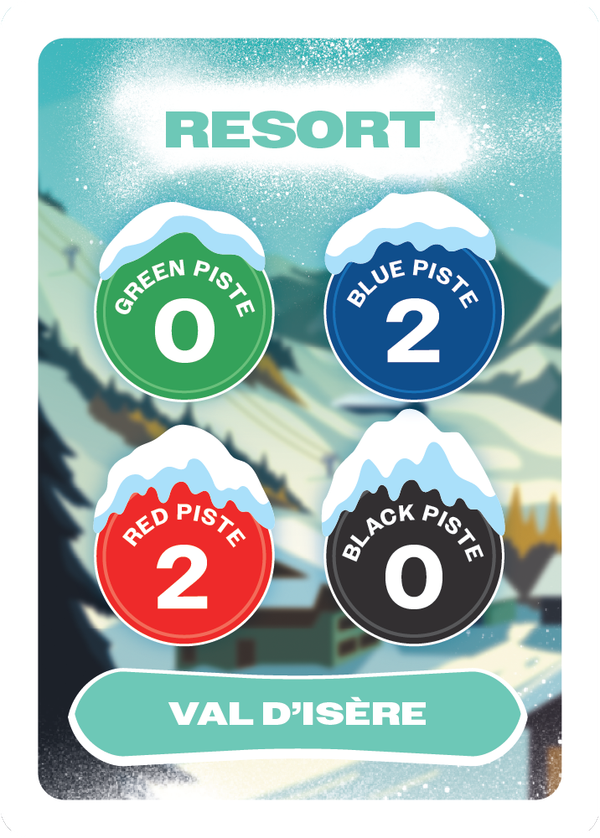
Val d'Isère's Ready Steady Slope Resort card captures the real resort's two-tone character: no green, but two blues alongside two reds and no blacks. That blue-and-red balance reflects a mountain that sits firmly in the confident-intermediate-to-expert range — demanding enough that beginners struggle, but with enough accessible blue terrain to give intermediate skiers a brilliant week without ever venturing onto the hardest runs.
The card hints at the Espace Killy's depth and variety: Val d'Isère is neither a beginner's resort nor an all-black-all-the-time freeride mountain, but a serious ski area that rewards confident skiers with sustained, technical terrain. That well-matched pairing of blues and reds makes it one of the more flexible cards in the game — a resort that can work in many different situations on the table, much as the real mountain works for many different types of skier.
The Real Val D'Isère
Together with its neighbour Tignes it forms the Espace Killy — one of the largest and most consistently snow-sure ski areas in France — but Val d'Isère has always had a character distinctly its own. The resort hosted the men's alpine events at the 1992 Albertville Winter Olympics and has remained on the World Cup circuit ever since, with the legendary Face de Bellevarde — a vertiginous, top-to-bottom black run — serving as the annual Critérium de la Première Neige downhill course. All of that pedigree shows on the mountain: Val d'Isère is primarily a resort for strong skiers, even if it hides more accessible terrain than its reputation might suggest.
High altitude, deep in the French Alps
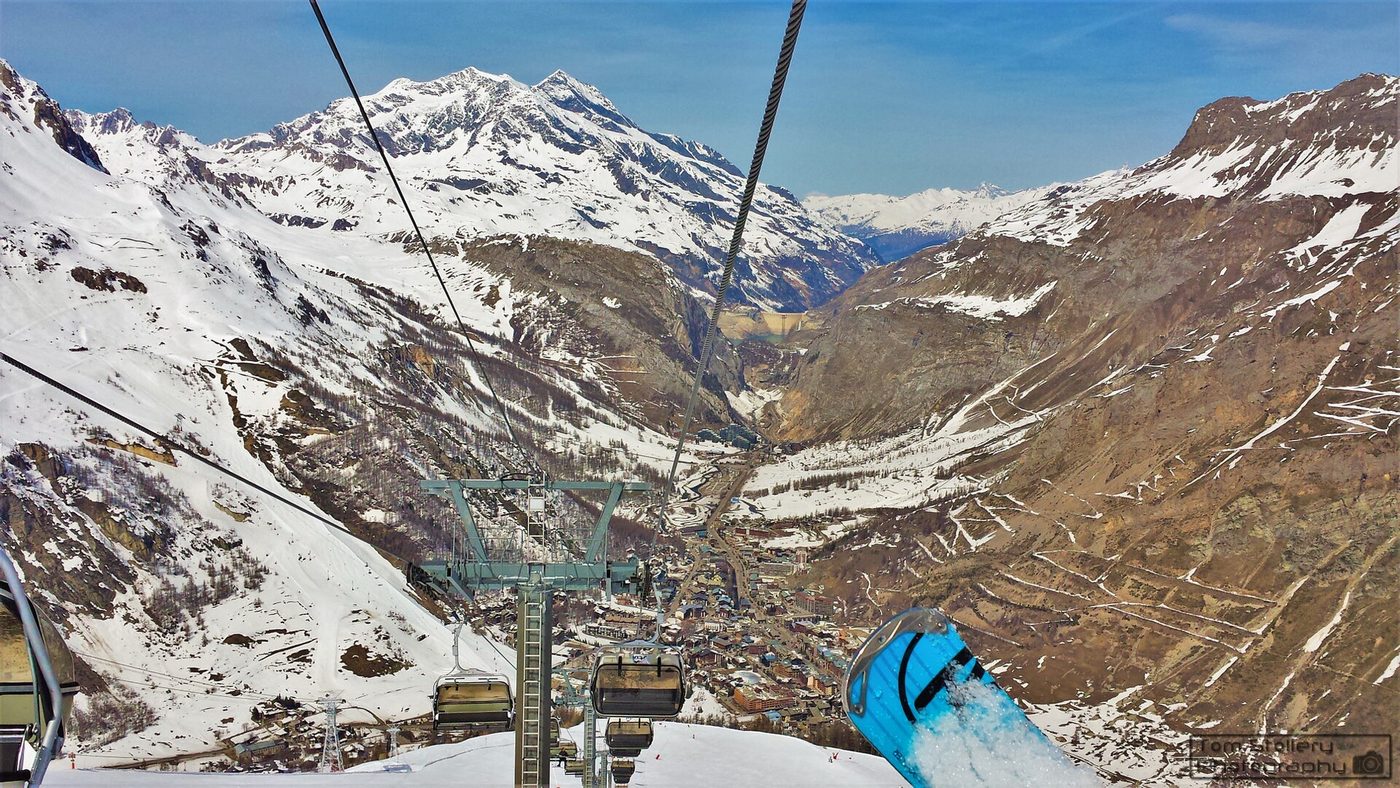
Val d'Isère's village sits at 1,850 metres, already one of the highest resort bases in the Alps, and the skiing climbs from there to over 3,000 metres on the Pisaillas glacier and the Rocher de Bellevarde. The result is a ski area that stays in condition longer than almost any resort in France — the glacier pistes are open in summer, and early-season skiing is a staple of the resort's calendar.
The Bellevarde sector, accessed via a fast gondola from the village, is the heart of the resort's reputation. From up top, the view down over the resort and back out along the valley is vast — a panorama of snow-covered ridges and rocky summits that makes clear why Val d'Isère sits at the very top of French Alpine skiing.
The terrain & skiing
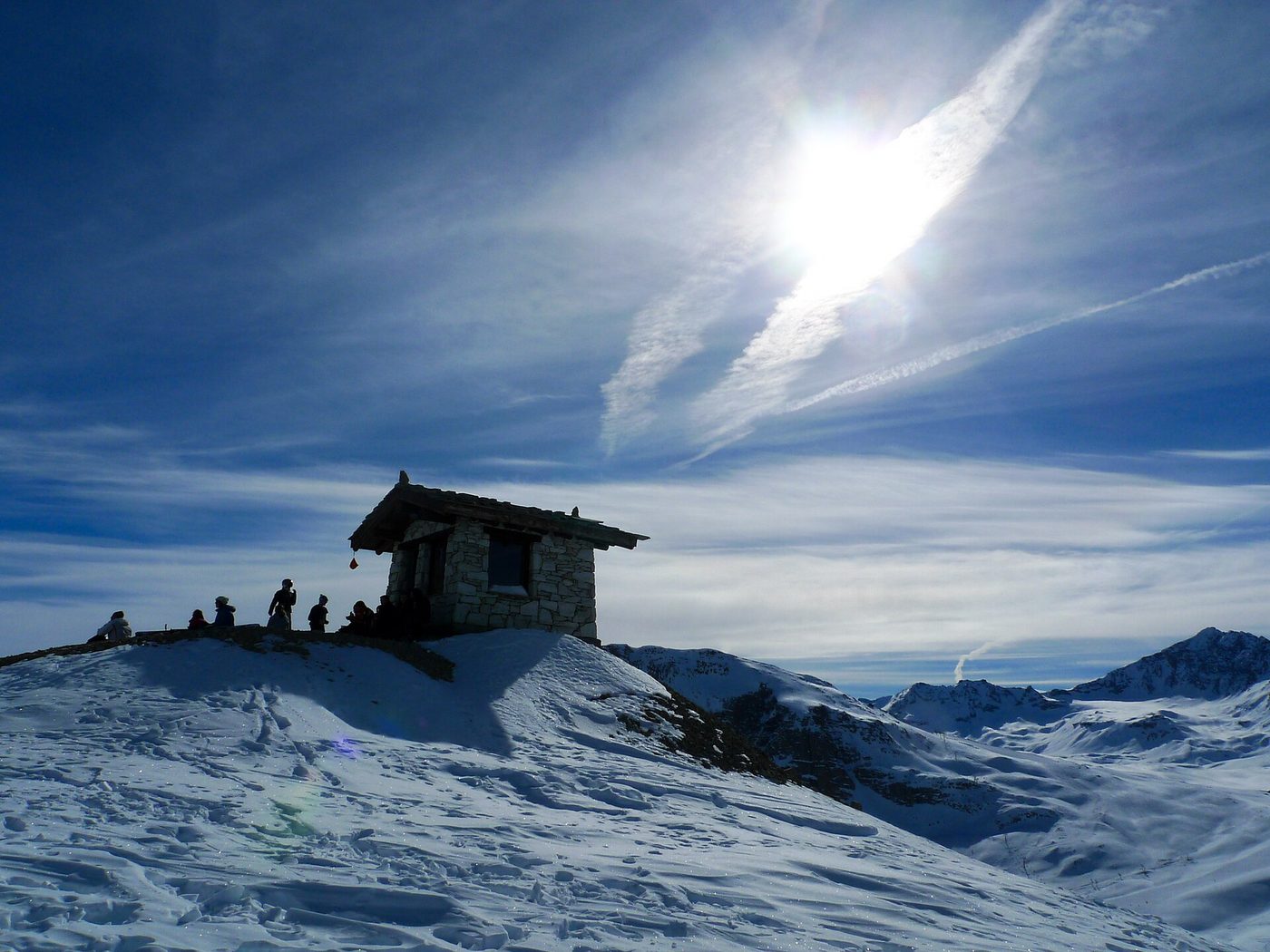
Val d'Isère alone offers around 150 kilometres of marked pistes — roughly 10 green, 15 blue, 33 red and 5 black runs, with the red runs very much the dominant grade. That red-heavy spread reflects the character of the mountain: a succession of long, sustained, genuinely challenging runs that reward skiers who can handle variable snow and steep terrain with confidence.
The Face de Bellevarde and the Solaise sector's Santons piste represent the black end of the spectrum, and they are among the most demanding groomed runs in the French Alps. But it is the reds — La Spatule, the Santons red, the long descents from Pisaillas — that give Val d'Isère its reputation for sustained, absorbing skiing that never lets you switch off.
Linking to Tignes via the Espace Killy pass opens up an additional 150 kilometres of pistes, including the Grande Motte glacier at 3,450 metres. The full Espace Killy area pushes the combined total to around 300 kilometres — enough terrain for a serious two-week trip without repetition.
The village & Olympic heritage
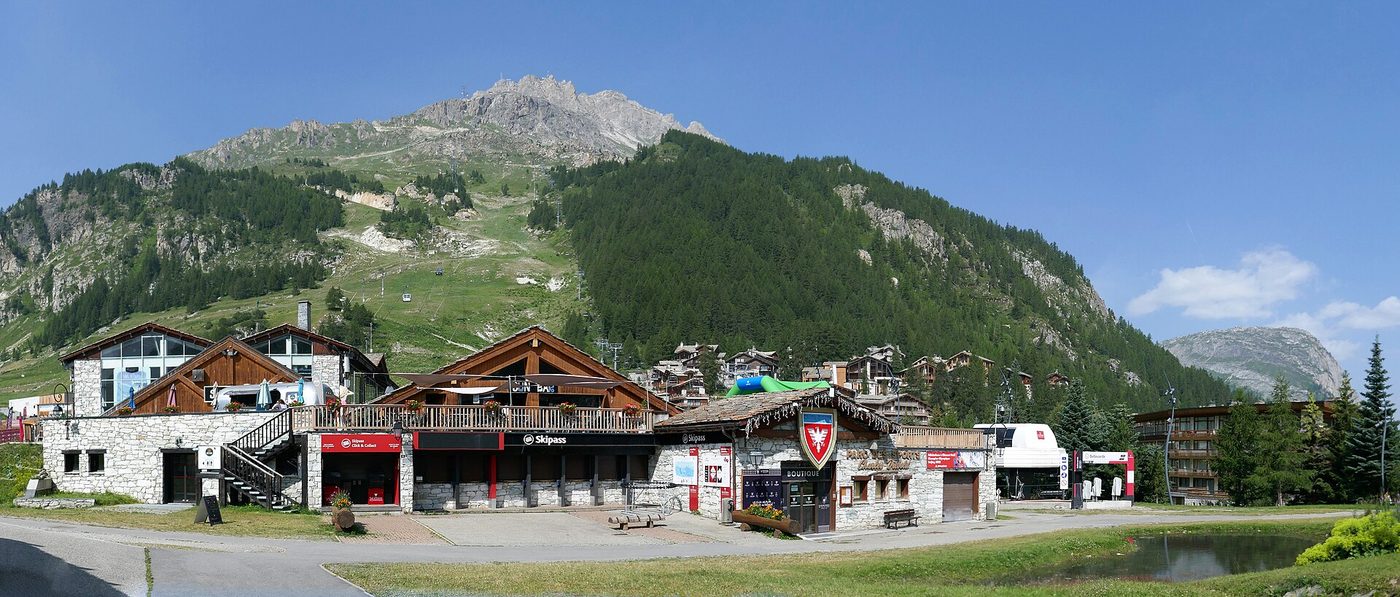
Val d'Isère village has grown substantially since the 1960s boom but has maintained a degree of character that many French purpose-built resorts lack. Stone-clad chalets, a Gothic church and a lively main street give it warmth, while the range of restaurants, bars and après-ski spots — from the famous Dick's Tea Bar to quieter alpine huts — suits every taste and budget.
The 1992 Olympic legacy is woven into the fabric of the resort: the Bellevarde face descends directly into the village, meaning the World Cup course is right there in front of you. Watching a World Cup race from the finish stadium — or simply skiing the very same piste the day after — is one of the singular experiences Val d'Isère offers that few other resorts can match.
Where is Val D'Isère?
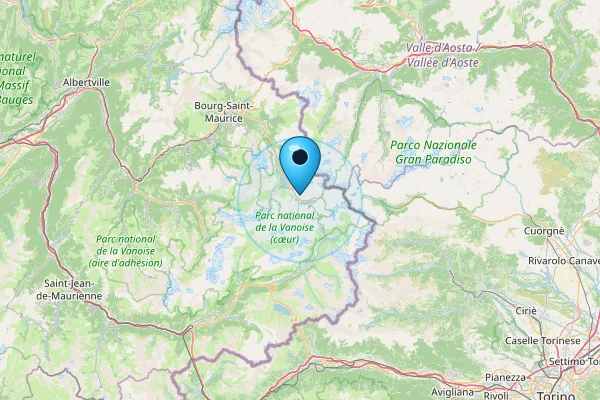
French Alps, France
How to get there
| Nearest airport | Transfer time (by road) |
|---|---|
| 🇨🇭Geneva (GVA) | ~2 hr 30 min |
| 🇫🇷Lyon (LYS) | ~2 hr 30 min |
| 🇫🇷Chambéry (CMF) | ~1 hr 45 min |
Graded runs at Val D'Isère
The in-game Resort card is a stylized approximation — here are Val D'Isère's actual marked pistes by grade.
| Grade | Runs |
|---|---|
| Green (beginner) | 10 |
| Blue (easy) | 15 |
| Red (intermediate) | 33 |
| Black (advanced) | 5 |
| Total | 63 |
Quick facts
Ready to hit the slopes?
With our game you can bring Val D'Isère to your table. Click below to find out where to buy, or visit the actual resort. Or even better… do both, and pack the cards for the après!