Arlberg, Tyrol · Austria
St. Anton
St. Anton am Arlberg occupies a place in skiing history that few resorts anywhere in the world can match. Hannes Schneider developed the Arlberg ski technique here in the 1920s, effectively inventing modern downhill skiing as a teachable discipline, and from that beginning the resort has grown into one of the great names in global skiing.
Why we put it in the game
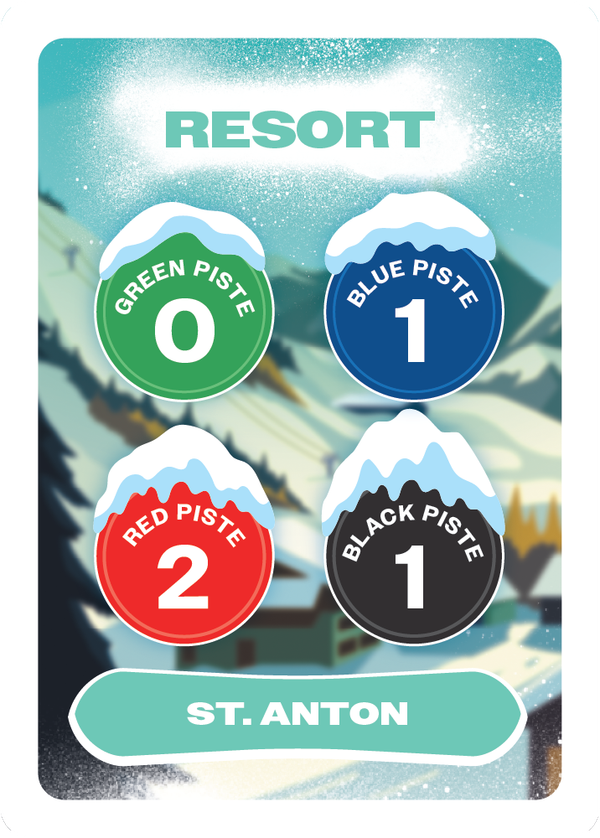
St. Anton's Ready Steady Slope Resort card reflects the real Arlberg character without compromise: no green runs, just a single blue, two reds and a black. That bottom-heavy, expert-leaning profile captures the essence of a resort where the piste map is dominated by red and black terrain, where off-piste is the main event, and where even the blue runs require a degree of confidence that most beginner resorts would class as red.
In game terms, this is a demanding card that rewards players who are comfortable with risk — just as the real St. Anton rewards skiers who are comfortable at the top of the Valluga looking at a choice of challenging lines with nothing gentle in sight. The single blue provides a foothold for more cautious play, but the card's identity is defined by those two reds and the black, a miniature portrait of one of alpine skiing's greatest and most storied resorts.
The Real St. Anton
St. Anton sits in the Tyrolean Alps where the main Alpine ridge crosses the Arlberg pass, a location that collects some of the heaviest snowfall in the entire Alps. Today it is the centrepiece of Ski Arlberg — a vast linked ski area that also encompasses Lech, Zürs, Stuben and Warth-Schröcken — with over 300 kilometres of marked pistes and a reputation for challenging, north-facing terrain that holds its powder better than almost any resort its size. The après-ski scene, centred on the Mooserwirt and Krazy Kanguruh huts at the base of the Schindler run, is one of the most famous in Europe.
The mountain & the Arlberg
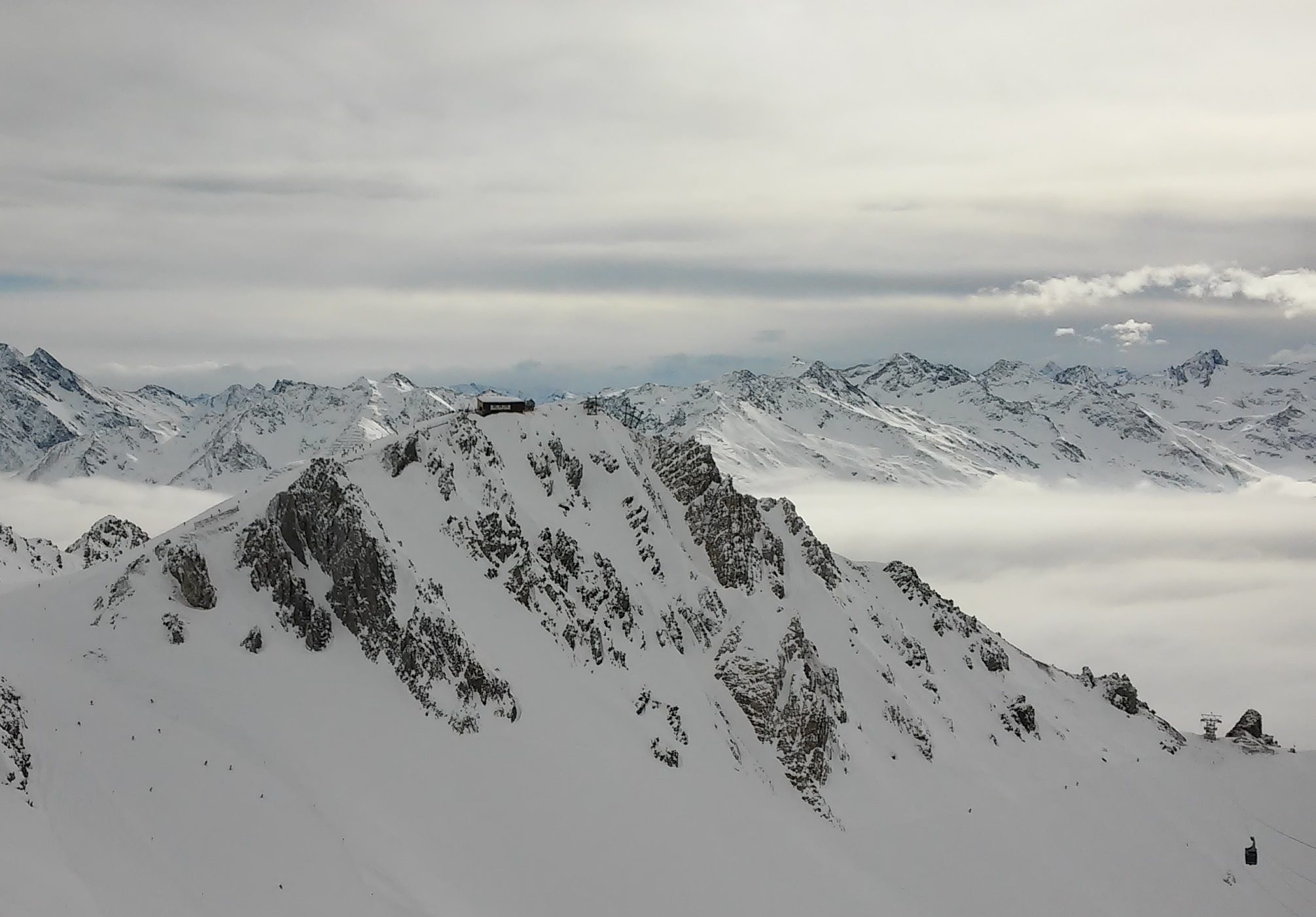
The Ski Arlberg domain sprawls across the northern flank of the main Alpine divide, straddling the border between Tyrol and Vorarlberg. On the St. Anton side, the terrain rises from the valley floor at around 1,300 metres to the Valluga summit at 2,811 metres — a dramatic, mostly north-facing amphitheatre of peaks, ridges and couloirs that holds snow superbly.
The Valluga cable car is the signature lift of the resort: a small cabin that takes experienced skiers to the summit, from where a guide can lead you down the legendary Valluga north face or you can ski the marked Schindlerkar back into the resort. It is one of the most celebrated lift-accessed descents in the Alps, and it sets the tone for a resort built around serious mountain skiing.
The terrain & skiing
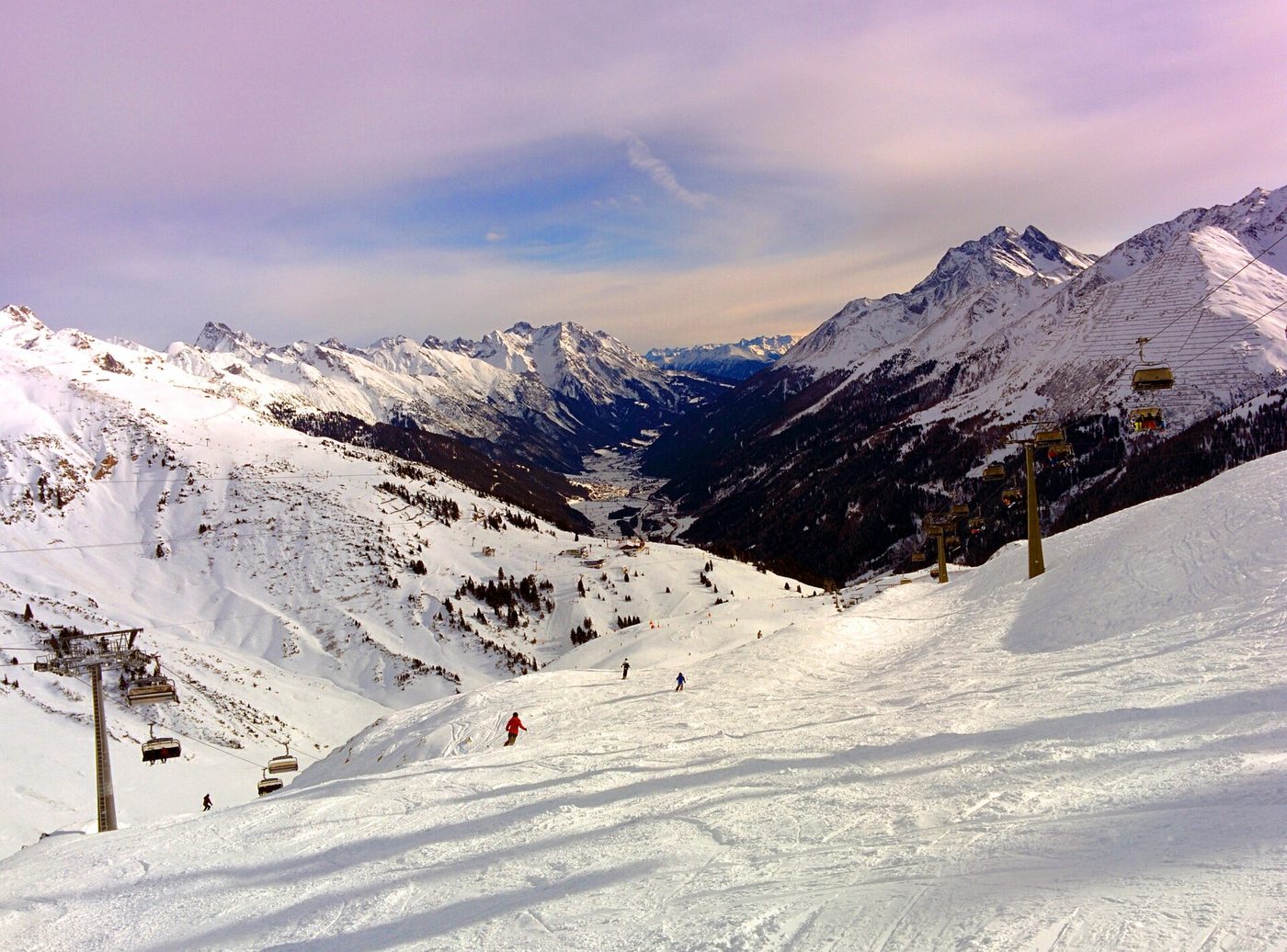
Within the full Ski Arlberg area there are around 189 marked pistes — roughly 40 blue, 115 red and 34 black runs, with no designated green pistes. That extraordinarily red-and-black-heavy split tells the unvarnished story of the Arlberg: this is expert terrain first, intermediate terrain second, and beginner terrain barely at all. The few easy pistes in the Gampen sector above St. Anton are accessible but short.
The Ski Arlberg pass opens up the entire linked area — a connection from St. Anton through Stuben to Lech and Zürs, and on to Warth-Schröcken — giving ambitious skiers over 300 km of terrain to cover. The off-piste is legendary in its own right: the Mattun, Schindlerkar and Albona couloirs above St. Anton are among the most coveted in-bounds freeride runs in the Alps.
For those who want to push further, the Verwalltal backcountry and the Valluga north face add serious mountain touring. But even on the marked runs, the sustained reds and the quality of the snow on the north-facing Arlberg slopes ensure there is no coasting.
The village & après-ski
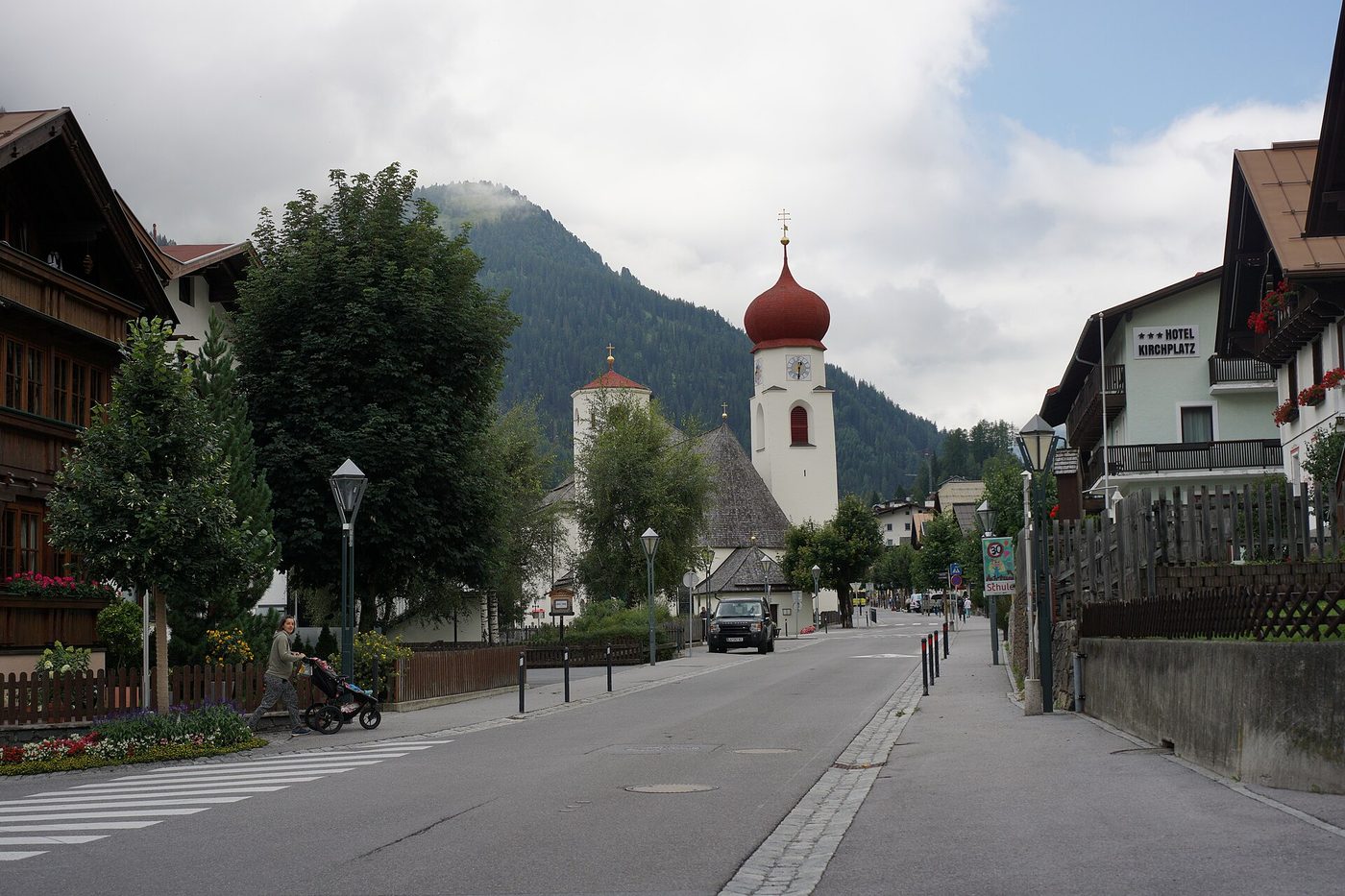
St. Anton am Arlberg is a proper Tyrolean village, not a purpose-built resort, and it wears its history proudly. The Dorfstrasse runs through a collection of traditional whitewashed buildings, timber-fronted hotels and the parish church whose onion dome is one of the most recognisable in the Austrian Alps. The village sits astride the main Arlberg road and railway line, making it one of the most accessible high-quality ski resorts in Austria.
The après-ski needs little introduction. The Mooserwirt and Krazy Kanguruh, both slope-side near the base of the Galzig cable car, are among the most famous mountain huts in the world — raucous, packed and in full swing from around 3 p.m. The party continues into the village bars and clubs well into the night, making St. Anton as celebrated for its social scene as for its skiing.
Where is St. Anton?
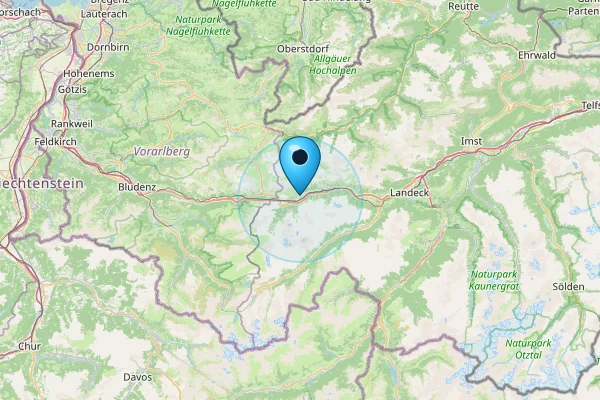
Arlberg, Tyrol, Austria
How to get there
| Nearest airport | Transfer time (by road) |
|---|---|
| 🇦🇹Innsbruck (INN) | ~1 hr 30 min |
| 🇨🇭Zurich (ZRH) | ~2 hr 30 min |
| 🇩🇪Munich (MUC) | ~2 hr 30 min |
Graded runs at St. Anton
The in-game Resort card is a stylized approximation — here are St. Anton's actual marked pistes by grade.
| Grade | Runs |
|---|---|
| Green (beginner) | 0 |
| Blue (easy) | 40 |
| Red (intermediate) | 115 |
| Black (advanced) | 34 |
| Total | 189 |
Quick facts
Ready to hit the slopes?
With our game you can bring St. Anton to your table. Click below to find out where to buy, or visit the actual resort. Or even better… do both, and pack the cards for the après!